
Flower Growing Guide
How to Grow Impatiens (Garden Balsam) from Seed
Grow garden balsam (Impatiens balsamina) and impatiens from seed: start indoors in warmth, plant out after frost, keep moist and enjoy camellia-like blooms.
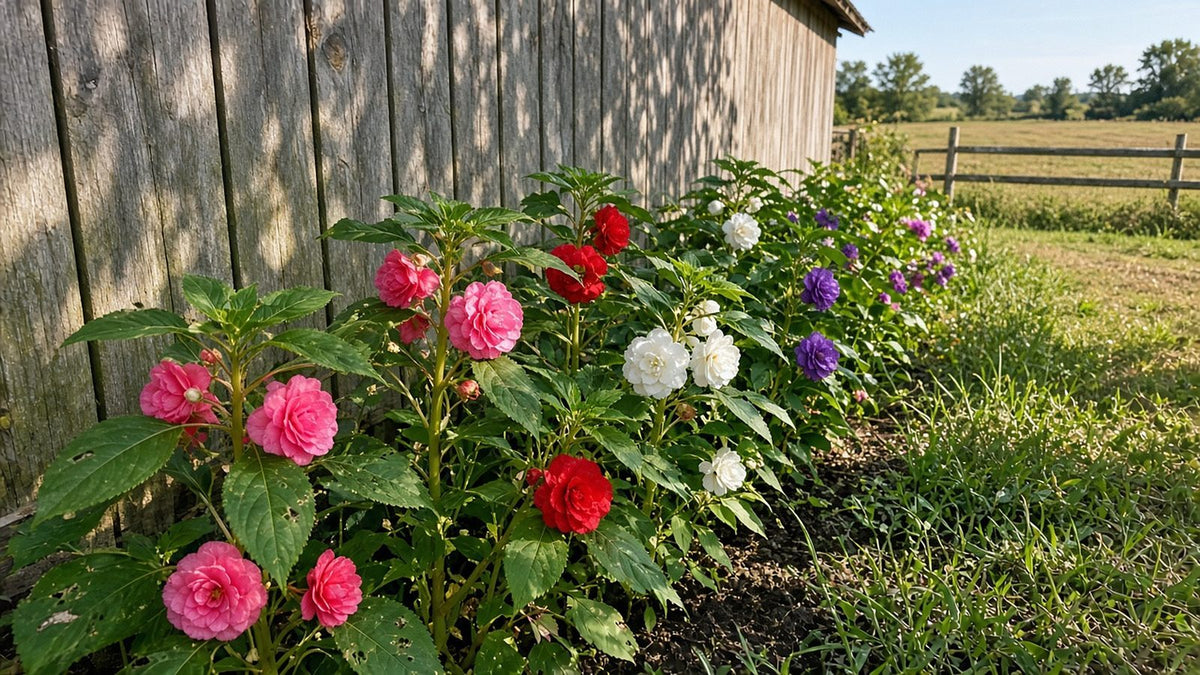
Garden balsam (Impatiens balsamina) is the old-fashioned impatiens grown from seed: upright plants up to about 30 inches tall with cup-shaped or double, camellia-like flowers tucked along the stems in pink, red, purple, white and bicolors.
Unlike shade-bedding impatiens, balsam handles more sun. It is a frost-tender annual that blooms from early summer to frost. Its ripe seed pods burst open when touched, which children love and which also spreads seed around the garden.
Impatiens quick facts
| Plant type | Frost-tender annual |
|---|---|
| Botanical name | Impatiens balsamina |
| Sun | Full sun to partial shade; afternoon shade in hot areas |
| Sowing depth | Barely cover, about ⅛ inch |
| Germination | About 7–14 days at 70–75°F |
| Spacing | 10–12 inches |
| Height | 12–30 inches |
| Start indoors | 6–8 weeks before last frost |
| Water | Consistently moist soil |
When to plant garden balsam
Start balsam seed indoors six to eight weeks before your last frost, or direct sow after the frost date once the soil is warm. Seedlings are tender, so wait until nights stay above about 50°F before planting out.
By zone:
- Cold zones (about 3–5): start indoors and transplant in early June.
- Mid zones (about 6–7): start indoors in March or direct sow in May.
- Warm zones (about 8–10): direct sow in spring and give afternoon shade in summer.
Where to grow garden balsam
Balsam likes rich, moist, well-drained soil. It flowers best with morning sun and some afternoon shade, especially in hot, dry climates. It has little drought tolerance, so plant it where you can water easily. It works in beds, along paths and in containers.
How to sow impatiens seeds

Starting seeds indoors
Sow seeds on moist seed-starting mix and cover them only very lightly. Keep the tray warm, around 70–75°F, and evenly moist; seedlings appear in about one to two weeks. Grow them in bright light, pot them up once if needed, and harden them off before planting out.
Direct sowing, step by step
- Wait until the soil is warm and frost has passed.
- Sow seeds and cover with a thin layer of fine soil.
- Keep the soil evenly moist until seedlings appear.
- Thin to 10–12 inches apart.
- Mulch to hold moisture around the roots.
Direct sowing works well once the soil is warm. Balsam often self-sows, and the seedlings can be moved while small.
Caring for garden balsam

Watering
Keep the soil evenly moist. Balsam wilts quickly in dry soil and heat.
Feeding
Work compost into the bed; a light balanced feeding in midsummer keeps plants growing.
Spacing and airflow
Give plants room; crowded, damp plantings are more prone to leaf diseases.
Pests and diseases
Watch for spider mites and aphids in hot, dry weather. Self-sown seedlings can become weedy, so pull extras while they are small.
Cutting and enjoying garden balsam

Balsam is mainly a bedding flower, since the blooms sit close to the stem. Short sprigs work in small posies and table arrangements. In the garden, the flowers attract bees and butterflies through summer.
Saving impatiens seeds
Seed is easy to collect but tricky to catch, because ripe pods burst at a touch. Slip a small paper bag over a plump, yellowing pod and pinch it closed, or gently cup the pod in your hand. Dry the seeds and store them cool and dry.
Balsam, bedding impatiens and New Guinea impatiens
Bedding impatiens (I. walleriana) are low, shade-loving plants usually bought as transplants. New Guinea impatiens are larger, with bold leaves, and handle more sun; they are slow from seed and need warmth and patience. Garden balsam is the easiest of the three to grow from seed and the most tolerant of sun, which is why it remains a seed-saver favorite.
Impatiens growing FAQ
Is balsam the same as impatiens?
Garden balsam is one species of impatiens, Impatiens balsamina. It is more upright and sun-tolerant than shade bedding impatiens.
Can balsam grow in full sun?
Yes, with steady moisture. In hot climates, afternoon shade helps.
Why do balsam seed pods explode?
Ripe pods split suddenly when touched, flinging seeds away from the plant. That is how the plant spreads.
Do impatiens come back every year?
Balsam and bedding impatiens are frost-tender annuals in most US gardens, although balsam often self-sows.
How long does balsam take to bloom from seed?
Usually about 60–70 days from sowing. Indoor-started plants set out after frost begin flowering in early summer and keep going until the first frost.
Shop impatiens seeds
Download the printable one-page impatiens guide (PDF)
Related growing guides
- How to Grow Begonias from Seed
- How to Grow Four O'Clocks from Seed
- How to Grow Marigolds from Seed
- How to Grow Zinnias from Seed
- How to Grow Celosia from Seed
See every guide in the Flower Library or the Grower's Library.
Sources: NC State Extension Plant Toolbox, Impatiens balsamina. Planting dates vary with your local frost dates; check your county extension office for local timing.