
Flower Growing Guide
How to Grow Marigolds from Seed
Grow African, French and signet marigolds from seed: start indoors or direct sow in warm soil, space by type, water and deadhead for blooms all season.
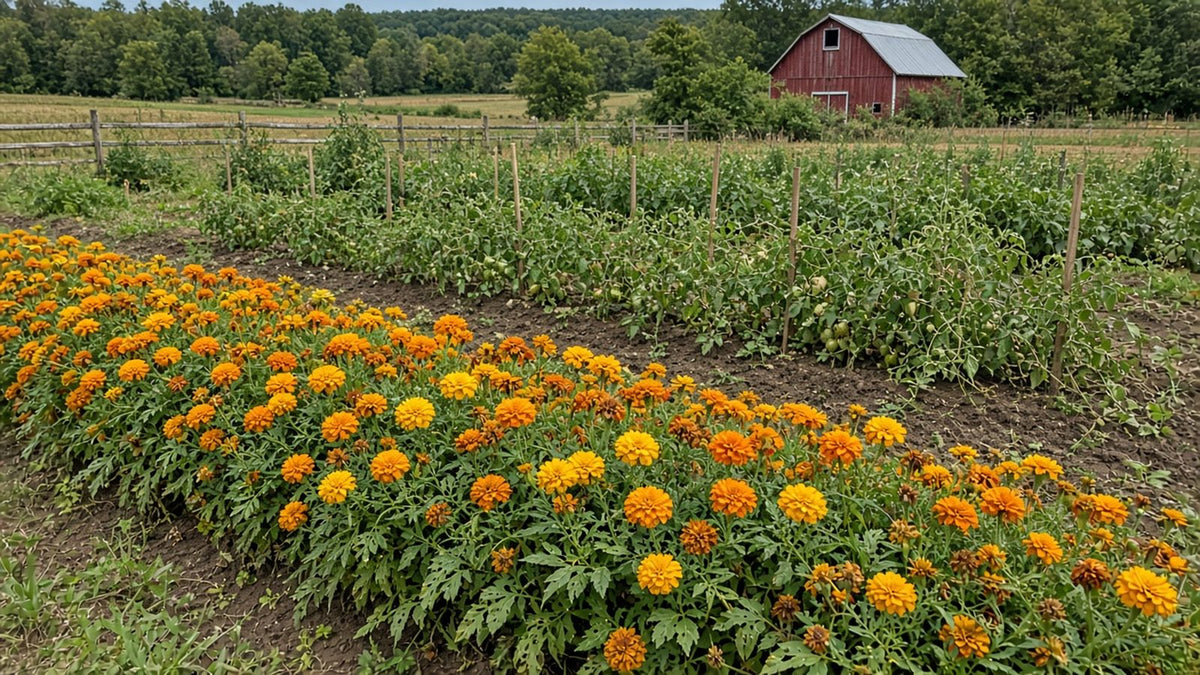
Marigolds are one of the best flowers for a first-time seed grower. They germinate in under a week, grow quickly, and bloom in gold, orange, yellow, cream and mahogany from early summer to frost.
There are three main types. African marigolds are tall, up to 3–4 feet, with big double blooms. French marigolds are bushy and compact at 6–18 inches. Signet marigolds are small mounds with single, edible flowers.
Marigold quick facts
| Plant type | Annual (Tagetes) |
|---|---|
| Sun | Full sun all day (6+ hours) |
| Soil | Well-drained, loamy |
| Sowing depth | About ¼ inch |
| Germination | 5–8 days at 70–75°F |
| Start indoors | 4–6 weeks ahead (African types about 8 weeks) |
| Direct sow | When soil reaches about 65°F |
| Spacing | French 8–10 in; African 12–16 in |
| Water | About 1 inch per week; let soil dry between waterings |
When to plant marigolds
Direct sow marigolds once the soil has warmed to about 65°F, after your last frost. For earlier flowers, start seeds indoors four to six weeks before your planting date, or about eight weeks ahead for tall African types (some guides suggest up to ten weeks). Transplant once frost danger is gone.
By zone:
- Cold zones (about 3–5): start indoors, especially African types, and transplant after frost.
- Mid zones (about 6–7): start indoors or direct sow in late spring.
- Warm zones (about 8–10): direct sow in spring; French marigolds hold up better than African types in heat and rain.
Where to grow marigolds
Marigolds need full sun all day to bloom all season. Give them well-drained, loamy soil; prepare beds by working in organic matter and loosening the soil about six inches deep. African types make good background plants and cut flowers. French and signet types suit edges and containers.
How to sow marigold seeds

Starting seeds indoors
Sow seeds about ¼ inch deep in a seed-starting mix, making sure they are fully covered. Keep them at 70–75°F, where they germinate in about 5–8 days. Then grow seedlings at 65–75°F by day and 65–70°F at night, and harden them off before transplanting after frost.
Direct sowing, step by step
- Wait for frost danger to pass and the soil to reach about 65°F (or start indoors 4–8 weeks earlier).
- Loosen the soil about 6 inches deep and work in organic matter.
- Sow seeds about ¼ inch deep, fully covered.
- Keep the soil moist until seedlings emerge in about a week.
- Thin or space French types 8–10 inches apart and African types 12–16 inches apart.
Marigolds germinate quickly and are easy to direct sow. French and signet types can be spaced closely to form a low hedge; give African types at least a foot.
Caring for marigolds

Watering
About an inch of water per week is enough; let the soil dry between waterings and water at the base.
Feeding
Average soil is fine; too much fertilizer can mean more leaves and fewer flowers.
Deadheading
Remove spent flowers to keep plants blooming and tidy.
Pests and diseases
Spider mites, aphids, thrips, slugs and leafhoppers can appear, along with leaf spot, root rot in wet soil, and aster yellows. Deer and rabbits sometimes browse plants. Good drainage and full sun prevent most problems.
Cutting and enjoying marigolds

Cut marigolds for arrangements when the flowers are nearly fully open. Regular cutting and deadheading keep new buds coming until frost.
Saving marigold seeds
Let a few blooms dry completely on the plant, then pull the dry flower head apart to collect the slender, dark seeds. Hybrid varieties may not come true.
Choosing a marigold type
French marigolds (Tagetes patula) are bushy and compact, usually 6–12 inches tall. Double flowers up to 2 inches wide are most common. They are ideal for edging and for planting close together as a low hedge.
African marigolds (Tagetes erecta) are the largest, reaching 3–4 feet, with a strong upright habit and big double flowers up to 5 inches across. Despite the name, they did not originate in Africa. Give them at least a foot of space.
Signet marigolds have small, single flowers and are the type best suited to containers. All marigold types are native to Central America and Mexico.
Marigolds as companion plants
Marigold foliage has a distinct odor that deer and rabbits tend to avoid, which is one reason gardeners tuck them among vegetables. Marigolds tolerate drought better than wet soil. In heavy ground, work in compost or sand to improve drainage before planting.
Marigold growing FAQ
How long do marigold seeds take to germinate?
About 5–8 days at 70–75°F.
Should I start marigolds indoors?
It's optional. Start them indoors four to six weeks ahead, or about eight weeks for African types, or direct sow once the soil is about 65°F.
How far apart should I plant marigolds?
French marigolds 8–10 inches; African marigolds 12–16 inches.
Do marigolds need full sun?
Yes. They need full sun all day to bloom through the season.
Are marigold flowers edible?
Signet marigolds have small single flowers that are used in salads and as a garnish.
Shop marigold seeds
Download the printable one-page marigold guide (PDF)
Related growing guides
See every guide in the Flower Library or the Grower's Library.
Sources: University of Minnesota Extension, Marigolds; Clemson Cooperative Extension HGIC, Marigold. Planting dates vary with your local frost dates; check your county extension office for local timing.