
Flower Growing Guide
How to Grow Zinnias from Seed
Grow zinnias from seed for nonstop summer color: sow in warm soil, space for airflow, cut often for more blooms and prevent powdery mildew. Full guide.
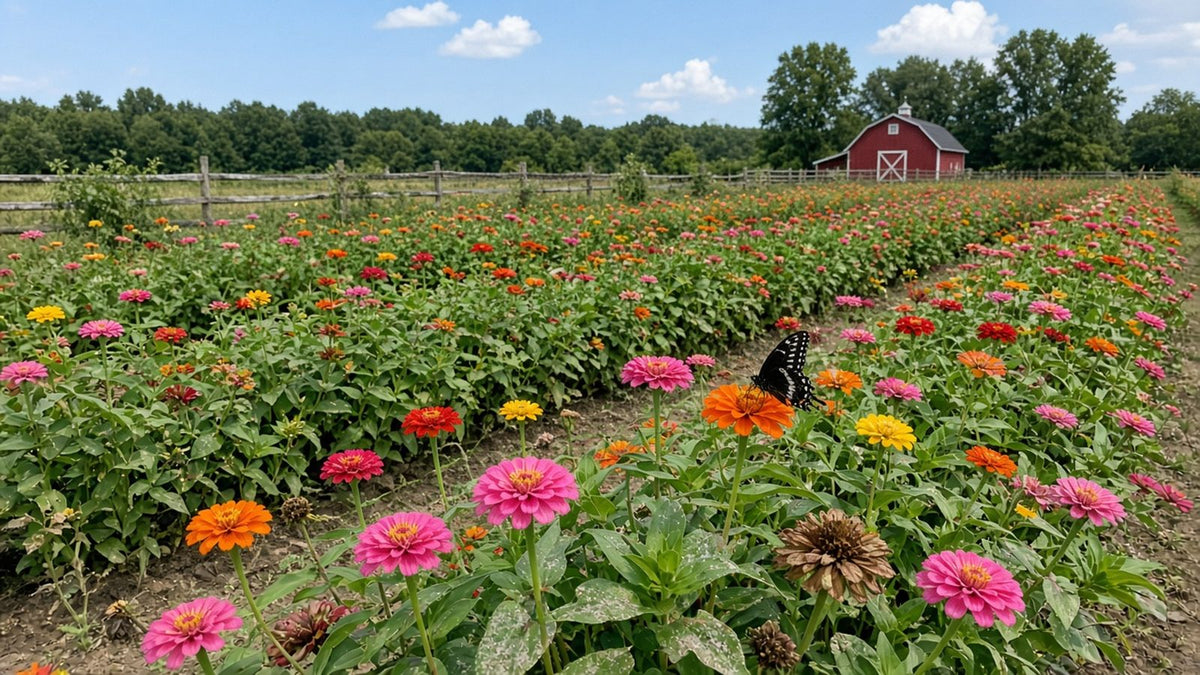
Zinnias are the workhorse of the summer flower garden: fast from seed, bright in every color except true blue, and the more you cut them, the more they bloom. Pollinators and butterflies visit constantly.
They are tender annuals that love heat, so they go in after frost, and they grow fast enough to direct sow in most gardens.
Zinnia quick facts
| Plant type | Tender annual |
|---|---|
| Sun | Full sun all day |
| Sowing depth | ¼ inch |
| Soil temperature to sow | At least 70°F |
| Germination | 4–8 days at 70–75°F |
| Spacing | 8–24 inches depending on plant habit |
| Start indoors | About 4–6 weeks before planting out |
| Water | Only when the top 1–2 inches of soil are dry |
| Main disease | Powdery mildew and leaf spots |
When to plant zinnias
Zinnias need warm soil. Direct sow once the soil is at least 70°F, usually a week or more after your last frost, or start seed indoors about six weeks ahead of transplanting. A second sowing a few weeks later keeps fresh plants blooming into fall.
By zone:
- Cold zones (about 3–5): start indoors 4–6 weeks early or direct sow once the soil is truly warm.
- Mid zones (about 6–7): direct sow in late spring; resow in early summer for a late flush.
- Warm zones (about 8–10): sow spring through midsummer; good airflow matters in humid weather.
Where to grow zinnias
Plant zinnias in full sun all day. In partial shade they flower less and are more prone to leaf spot diseases. They perform better in garden beds than containers. Choose a well-drained spot with good air movement, and leave enough room between plants for leaves to dry quickly after rain.
How to sow zinnia seeds

Starting seeds indoors
Sow seeds ¼ inch deep in a germination mix about six weeks before your outdoor planting date. Zinnias germinate best in darkness, so cover the tray with black plastic until sprouts appear in 4–8 days at 70–75°F. Then grow them in bright light at 70–75°F by day and 65–70°F at night, and harden them off before planting out after frost.
Direct sowing, step by step
- Wait until the soil is at least 70°F.
- Sow seeds ¼ inch deep in a sunny, well-drained bed.
- Keep the soil lightly moist until seedlings emerge, usually within a week.
- Thin to 8–24 inches apart, closer for single-stem types and wider for bushy ones.
- Pinch young plants once to encourage branching and longer stems.
Zinnias grow quickly, so direct sowing works well and avoids transplant shock. Cut-flower growers often pinch the top 3–4 inches off young plants to encourage branching and more stems.
Caring for zinnias

Watering
Water regularly but not too much: zinnias tolerate drier soil better than soggy soil. Water only when the top 1–2 inches are dry, and water at the base of the plant to keep the foliage dry.
Feeding
Moderately fertile soil is enough. Too much nitrogen gives leafy growth.
Cutting and deadheading
Cut flowers or remove spent blooms regularly to keep plants producing. Cutting stems a few nodes below the bloom encourages long-stemmed regrowth.
Pests and diseases
Powdery mildew and leaf spots are the main problems, especially in shade, crowded plantings or wet foliage. Aphids, spider mites, thrips and leafhoppers can appear too. Because zinnias feed so many beneficial insects, extension advice is to avoid insecticides other than insecticidal soap. Rotate bedding locations and clear plant debris at season's end.
Cutting and enjoying zinnias

For vases, cut zinnias in the cool part of the day. Choose blooms with at least two full rows of petals expanded and a mostly stiff upper stem; flowers cut too early droop quickly. Cut deep, two to four nodes below the bloom, to encourage long-stemmed regrowth, and put stems straight into cool water. Cutting often keeps new flowers coming all summer.
Saving zinnia seeds
Let a few of the best flowers dry fully on the plant, then pull the dry petals and seeds apart. The arrow-shaped seeds are at the base of the petals. Hybrid varieties may not come true.
Choosing zinnia varieties
Small zinnia varieties, such as the Mexican, Queen and Zinderella series, are suited to close spacing, while large varieties like Benary's Giant, California and Dahlia types need more room. For cut flowers, expect about seven to ten days of vase life; change the water regularly to keep blooms fresh longer.
Zinnia growing FAQ
How deep do you plant zinnia seeds?
About ¼ inch deep, in soil that is at least 70°F.
How long until zinnias sprout?
About 4–8 days at 70–75°F.
Why do my zinnias get white powder on the leaves?
That's powdery mildew. Plant in full sun, space plants for airflow, water at the base and remove badly affected leaves.
Do zinnias come back every year?
Zinnias are annuals. They may self-sow, but most gardeners sow fresh seed each year.
Should I deadhead zinnias?
Yes. Cutting flowers and removing faded blooms keeps plants flowering.
Shop zinnia seeds
Download the printable one-page zinnia guide (PDF)
Related growing guides
See every guide in the Flower Library or the Grower's Library.
Sources: University of Minnesota Extension, Zinnia; Clemson Cooperative Extension HGIC, Zinnia; Utah State University Extension, Zinnia cut flower production in Utah. Planting dates vary with your local frost dates; check your county extension office for local timing.