
Flower Growing Guide
How to Grow Celosia from Seed
Grow celosia (cockscomb and plumed) from seed: start indoors in warmth, plant out in hot sun, pinch for more stems and cut and dry flowers for months of color.
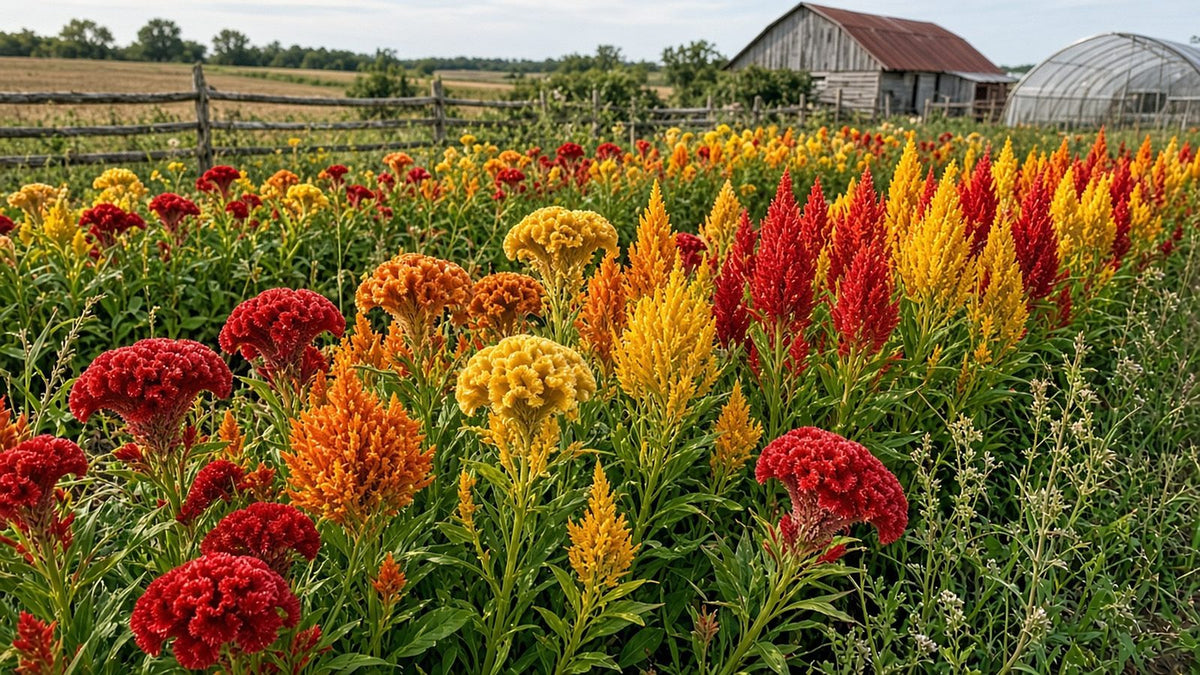
Celosia brings velvety texture and hot colors to summer gardens. Crested types (cockscomb) form ruffled, brain-like heads; plumed types make feathery flames; and wheat types have slender spikes. All come in red, orange, yellow, pink and magenta.
It is a tender annual that loves heat and humidity, and it is one of the best flowers for drying. Once warm weather arrives, it blooms steadily until frost.
Celosia quick facts
| Plant type | Tender annual |
|---|---|
| Botanical name | Celosia argentea (crested and plumed groups) |
| Sun | Full sun, 8 hours or more |
| Sowing depth | Barely cover, about ⅛ inch |
| Germination | About 8–14 days at 72–80°F |
| Spacing | 8–12 inches |
| Start indoors | 6–8 weeks before last frost |
| Soil temperature to plant out | At least 55–60°F |
| Use | Fresh and dried flowers |
When to plant celosia
Start seed indoors six to eight weeks before your last frost, or direct sow after the soil is warm. Wait until nights stay above 55°F to plant out. Cold, wet soil and chilly nights can stunt plants or make them flower too early on short stems.
By zone:
- Cold zones (about 3–5): start indoors and transplant in early June once nights are warm.
- Mid zones (about 6–7): start indoors in March or April, or direct sow in late May.
- Warm zones (about 8–10): direct sow from spring through early summer; celosia handles heat and humidity well.
Where to grow celosia
Plant celosia in full sun, at least eight hours a day, in fertile, well-drained soil. It tolerates dry spells once established but grows biggest with steady moisture. Good drainage matters, since soggy soil leads to stem and root rot.
How to sow celosia seeds

Starting seeds indoors
Sow seed on the surface of moist seed-starting mix and cover very lightly. Keep the tray warm, around 72–80°F, using a heat mat if needed; seedlings appear in about one to two weeks. Grow in bright light, avoid letting the roots get pot-bound, and plant out promptly once the weather is warm. Transplants that sit too long in small cells may bloom early and stay small.
Direct sowing, step by step
- Wait until the soil is warm and nights stay above about 55°F.
- Sow seeds thinly and cover with no more than ⅛ inch of fine soil.
- Keep the surface moist until seedlings emerge.
- Thin to 8–12 inches apart.
- Pinch plumed and wheat types once at about 8–10 inches to encourage branching.
Direct sowing works well in warm regions. For single huge crests on cockscomb types, skip the pinch; for many medium stems for bouquets, pinch early.
Caring for celosia

Watering
Water regularly while plants establish. Mature plants are fairly drought tolerant, but even moisture gives taller stems.
Feeding
Mix compost or a balanced slow-release fertilizer into the bed at planting. Avoid heavy nitrogen, which favors leaves over flowers.
Deadheading
Cut spent heads to keep side shoots coming, unless you want self-sown seedlings.
Pests and diseases
Celosia has few pest problems. Watch for spider mites in hot, dry weather and leaf spot or stem rot in wet, crowded beds.
Cutting and enjoying celosia

Cut celosia for fresh bouquets when the heads are fully colored but before seeds form at the base. Strip the leaves, which wilt first, and place stems in water. To dry, hang small bundles upside down in a dark, airy place for two to three weeks; the color holds well for months.
Saving celosia seeds
Let a few heads mature on the plant. The tiny, shiny black seeds fall out when you shake a dry head over a bag. Celosia can self-sow in warm climates.
Crested, plumed or wheat celosia?
Crested cockscomb gives bold, sculptural heads that are striking in arrangements and dry beautifully. Plumed celosia branches more and gives many feathery stems, the best choice for a steady supply of cut flowers. Wheat celosia produces slim, spiky heads that add height and fine texture. All three share the same growing needs.
Celosia growing FAQ
Does celosia need light to germinate?
It needs only a very light covering. Sow on the surface and barely cover it, then keep it warm.
Why are my celosia small with tiny flowers?
Cold soil, chilly nights or seedlings held too long in small pots can trigger early flowering. Plant out once it is warm.
How do you dry celosia?
Cut fully colored heads, strip the leaves and hang them upside down in a dark, dry spot for a couple of weeks.
Is celosia an annual?
Yes. It is a frost-tender annual in the United States, though it may self-sow in warm areas.
Shop celosia seeds
Download the printable one-page celosia guide (PDF)
Related growing guides
- How to Grow Zinnias from Seed
- How to Grow Cosmos from Seed
- How to Grow China Asters from Seed
- How to Grow Marigolds from Seed
- How to Grow Sunflowers from Seed
See every guide in the Flower Library or the Grower's Library.
Sources: University of Minnesota Extension, Celosia; University of Maryland Extension, Production of celosia as a cut flower; Mississippi State University Extension, Cockscomb for the farmer florist; NC State Extension Plant Toolbox, Celosia argentea. Planting dates vary with your local frost dates; check your county extension office for local timing.