
Flower Growing Guide
How to Grow Sunflowers from Seed
Grow sunflowers from seed: when to direct sow, planting depth and spacing for dwarf to giant types, watering, staking, birds and harvesting seed heads.
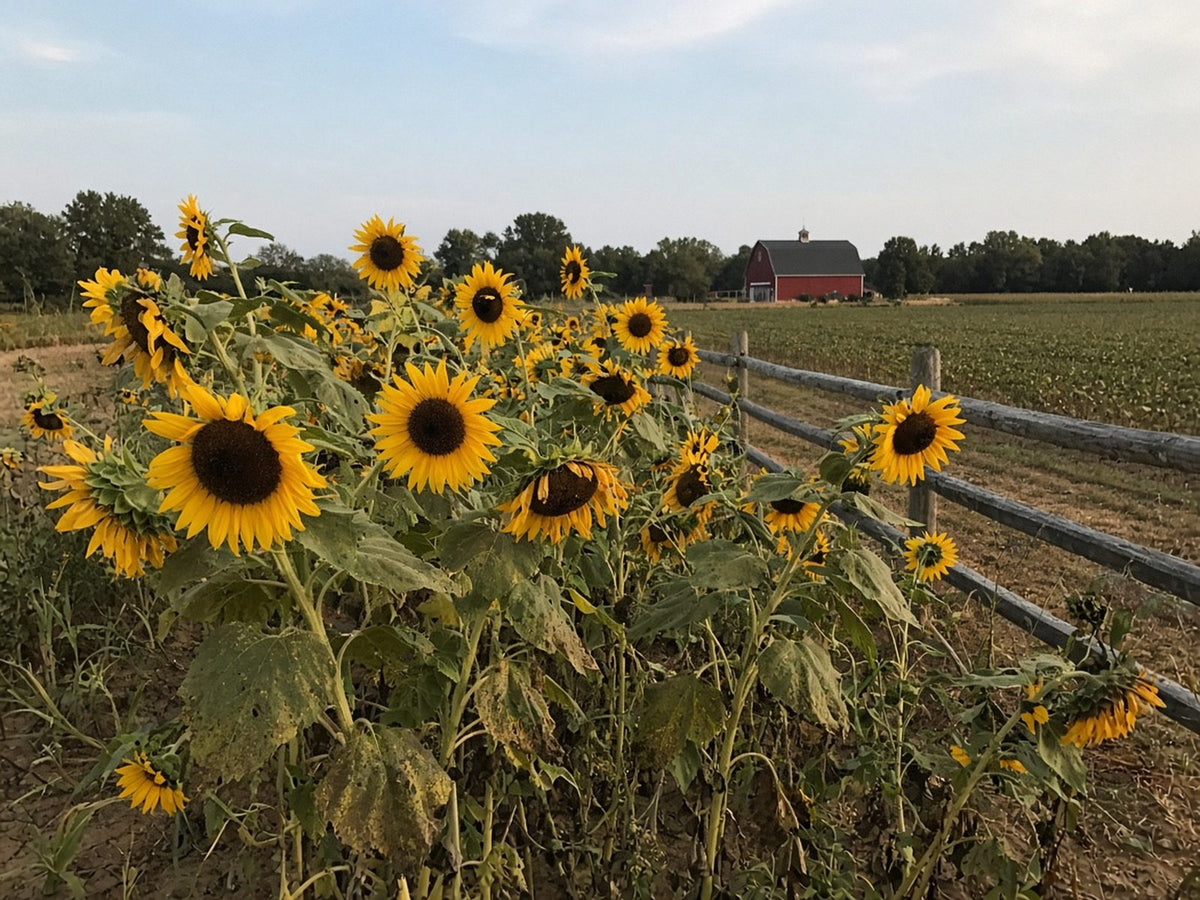
Sunflowers are among the easiest flowers to start from seed. The seeds are big enough for small hands, they sprout within about a week to ten days, and the plants grow fast enough that you can practically watch them climb.
Today's sunflowers go well beyond tall yellow giants. There are branching cut-flower types, dwarf varieties for containers, and blooms from pale cream to deep red. Most are grown the same simple way: direct sown in full sun after the frost.
Sunflower quick facts
| Plant type | Annual; native to North America |
|---|---|
| Sun | Full sun |
| Sowing depth | 1 inch |
| When to sow | After all danger of frost has passed |
| Germination | 7–10 days |
| Spacing | 6 inches (2–5 ft types); 1 ft for taller types; 2 ft for giants |
| Height | Under 3 ft (dwarf) to 8 ft or more (giants) |
| Water | Tolerates some drought; water regularly around flowering |
| Start indoors? | Optional, in plantable pots |
When to plant sunflowers
Sow sunflowers outdoors once all danger of frost is past. Because they grow quickly, you can sow small batches every few weeks into early summer for color all season.
By zone:
- Cold zones (about 3–5): sow after the last frost; quick-maturing and dwarf varieties finish well before fall frost.
- Mid zones (about 6–7): sow from late spring and repeat into early summer for successive blooms.
- Warm zones (about 8–10): sow in spring and again in summer; a long season allows several rounds.
Where to grow sunflowers
Sunflowers need full sun. Plant tall varieties at the back of a border or along a fence where they won't shade shorter plants, and where wind won't topple them; giants sometimes need staking. Compact types under about 3 feet suit the front of beds, small spaces and containers. Allow room: crowded plants compete for light and air.
How to sow sunflower seeds

Starting seeds indoors
Sunflowers can be started indoors, but they dislike root disturbance. Sow one or two seeds per biodegradable pot so you can plant the whole pot without disturbing the roots, and transplant once true leaves have formed and frost has passed.
Direct sowing, step by step
- Choose a sunny spot and loosen the soil.
- After frost, sow seeds 1 inch deep.
- Space by type: about 6 inches for 2–5-ft varieties, 1 ft for taller ones, 2 ft for giants.
- Keep the soil moist until seedlings appear in 7–10 days.
- Protect seedlings from birds if needed, and stake giant varieties as they grow.
Direct sowing is the simplest method and the one most growers use. Water gently after sowing and keep the soil moist until the seedlings are up.
Caring for sunflowers

Watering
Established sunflowers can handle some drought, but water them regularly from about 20 days before to 20 days after flowering. This builds strong roots, which matters for tall varieties carrying top-heavy blooms.
Feeding
Average garden soil is generally fine. Fertilize according to a soil test rather than by habit.
Support
Giant cultivars that reach eight feet or more may need a stake, especially in windy spots.
Pests and wildlife
Birds love sunflower seeds, both newly sown and ripening in the heads. Scare tactics like spinners, scarecrows and owl decoys can help, as can covering heads with mesh bags as seeds fill. Deer, aphids and stink bugs can also be a problem.
Cutting and enjoying sunflowers

Cut sunflowers for bouquets when the petals are just starting to open. For seed, leave the heads on the plant until the back of the head turns yellow-brown and the seeds are plump, then cut the head with a length of stem and hang it somewhere dry and airy until the seeds loosen.
Saving sunflower seeds
Open-pollinated sunflowers can be saved from dried heads. Many cut-flower varieties are pollenless or hybrid and may not produce seed that comes true.
Choosing a sunflower
Branching sunflowers grow quite large and produce lots of blooms over a long period. Space them 18–24 inches apart. Pollenless sunflowers are used mainly for cutting because they don't shed the bright yellow pollen that stains clothing; they range from 2 to 8 feet tall. Dwarf sunflowers stay 3 feet or less and suit the front of beds and containers. Semi-dwarf types grow 3–8 feet and usually don't need staking. Space giant varieties about 2 feet apart.
Sunflowers aren't only yellow: they range from pale white to deep red.
Sunflower growing FAQ
How deep should I plant sunflower seeds?
About 1 inch deep.
How long do sunflowers take to germinate?
Usually 7–10 days in warm soil.
How far apart should sunflowers be planted?
About 6 inches for varieties 2–5 feet tall, a foot for taller types and 2 feet for giants.
Can sunflowers grow in pots?
Dwarf varieties of about 3 feet or less are well suited to containers.
How do I stop birds from eating my sunflower seeds?
Use scare devices, or cover ripening heads with mesh or paper bags once the petals fade.
Shop sunflower seeds
Download the printable one-page sunflower guide (PDF)
Related growing guides
See every guide in the Flower Library or the Grower's Library.
Sources: University of Minnesota Extension, Sunflowers. Planting dates vary with your local frost dates; check your county extension office for local timing.