
Vegetable Growing Guide
How to Grow Squash from Seed
Grow summer squash, zucchini and winter squash from seed: sow in warm soil, space bush and vining types, beat squash bugs and vine borers, harvest right.
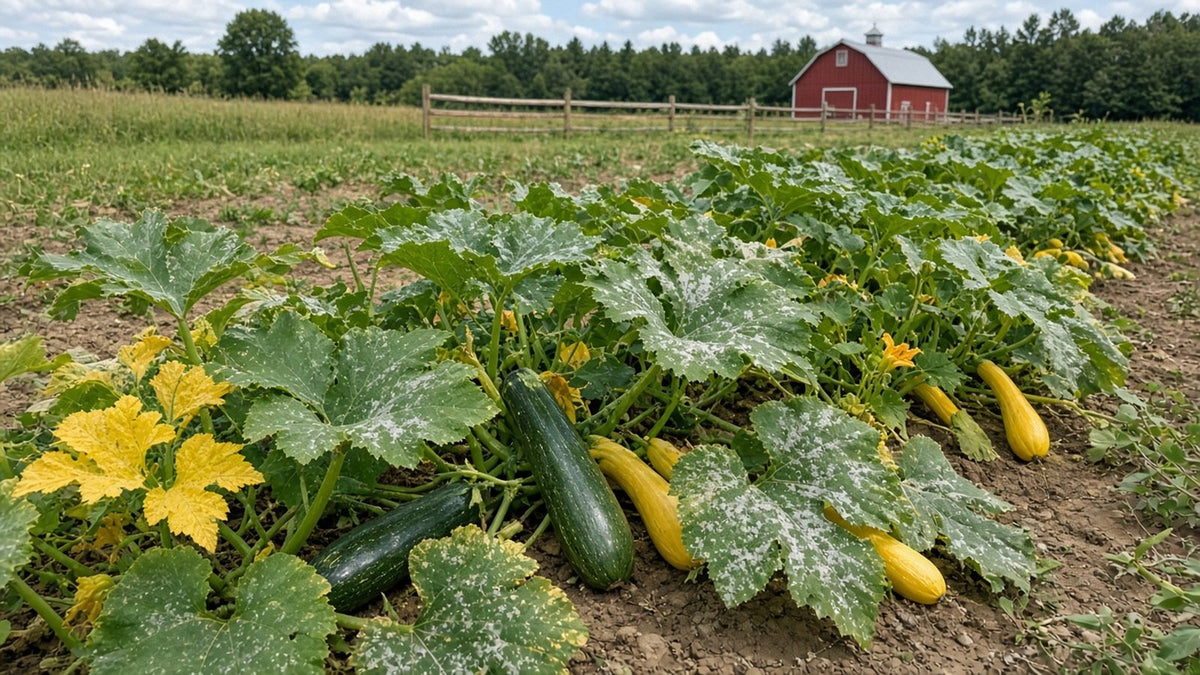
Squash splits into two groups. Summer squash and zucchini are picked young and tender, all summer long. Winter squash, like butternut, acorn, delicata and spaghetti, is left to mature into hard-skinned fruit that stores for months.
Both are grown the same way at planting time: direct sown into warm soil after frost, with plenty of room to spread.
Squash quick facts
| Plant type | Very tender warm-season annual (cucurbit family) |
|---|---|
| Sun | Full sun |
| Soil temperature to sow | At least 70°F at 2 inches deep (summer squash) |
| Sowing depth | About ½ inch (winter squash ½–¾ inch) |
| Spacing | Thin to 8–12 in (summer); 24–36 in (winter); hills 5–6 ft apart |
| Bush types | Rows or hills 2–3 ft apart |
| Start indoors? | Usually not; transplanting damage is common |
| Mulch | Wait until soil is 75°F before organic mulch |
| Winter squash storage | About 55°F, 50–75% humidity |
When to plant squash
Sow squash after your last frost date, once the soil reaches at least 70°F at a two-inch depth; in northern areas that's usually late May or early June. Seeds won't germinate in cold soil, and transplants set into cold soil sulk. Winter squash needs a long season, so check days to maturity and sow as soon as conditions allow.
By zone:
- Cold zones (about 3–5): sow in late spring once the soil is warm; choose shorter-season winter squash like acorn or delicata.
- Mid zones (about 6–7): sow after frost; a second summer squash sowing in midsummer can outlast early pest damage.
- Warm zones (about 8–10): sow in spring and again in late summer for fall.
Where to grow squash
Plant in full sun and fertile, well-drained soil with compost worked in. Vining types spread two or three feet or more on each side of the row. Bush varieties fit small beds and containers. Small-fruited winter squash like delicata or acorn can be trained up a sturdy trellis to save space.
How to sow squash seeds

Starting seeds indoors
Squash started indoors often struggles in the garden because of transplanting damage, so direct seeding is preferred. If you do start indoors, use large individual pots, start only a few weeks ahead, and handle the root ball very gently.
Direct sowing, step by step
- Wait until the soil is at least 70°F at 2 inches deep.
- Sow seeds about ½ inch deep, 2 inches apart in rows, or 3–4 seeds per hill.
- Space hills 5–6 feet apart (2–3 feet for bush types).
- Keep the soil moist until seedlings appear.
- Thin to 8–12 inches apart for summer squash, wider for winter squash.
Allow two to three feet on either side of a row for vines to spread. If you use straw or compost mulch, wait until the soil is at least 75°F, since organic mulches slow soil warming. Black plastic mulch speeds warming instead.
Caring for squash

Watering
Water deeply at the base of the plants and keep moisture steady, especially once flowering and fruiting begin.
Feeding
Side-dress with fertilizer when the plants begin to spread their vines.
Pollination
Squash produces separate male and female flowers. Early male flowers drop off naturally; fruit forms on female flowers after bees pollinate them.
Pests and diseases
Squash bugs, squash vine borers and cucumber beetles are the major pests. Powdery mildew, anthracnose and leaf spot are common diseases. Check the undersides of leaves for squash bug eggs, use row covers on young plants (remove them at bloom), and pull out plants killed by borers.
Harvesting squash

Pick zucchini and summer squash young and tender, and check every day or two at peak; oversized fruit slows production. Winter squash is ready when the rind is hard and the color has fully developed; harvest before a hard freeze. Cut winter squash with a piece of stem attached, field-cure it for a week or two in dry, sunny weather (or indoors if it's cold or wet), then store around 55°F with good airflow and 50–75% humidity.
Saving squash seeds
Squash in the same species cross readily, so save seed only from isolated open-pollinated plants. Take seed from fully mature fruit; summer squash must be left to grow large and hard first.
Squash growing FAQ
When should I plant squash seeds?
After the last frost, once the soil is at least 70°F at two inches deep.
Why are my squash flowers falling off?
The first flowers are usually male and drop naturally. Female flowers, with a tiny fruit at the base, follow.
What is the difference between summer and winter squash?
Summer squash is eaten young with tender skin; winter squash matures on the vine to a hard rind and stores for months.
Why did my squash plant suddenly wilt?
Squash vine borers tunneling in the stem and bacterial wilt spread by cucumber beetles are common causes.
How should I store winter squash?
Cure it for a week or two, then keep it at about 55°F with good air movement.
Shop squash seeds
Download the printable one-page squash guide (PDF)
Related growing guides
- How to Grow Carrots from Seed
- How to Grow Tomatoes from Seed
- How to Grow Lettuce from Seed
- How to Grow Cucumbers from Seed
- How to Grow Radishes from Seed
- How to Grow Peppers from Seed
See every guide in the Vegetable Library or the Grower's Library.
Sources: University of Minnesota Extension, Growing summer squash and zucchini; University of Minnesota Extension, Pumpkins and winter squash; University of Maryland Extension, Growing pumpkins in the home garden. Planting dates vary with your local frost dates; check your county extension office for local timing.