
Vegetable Growing Guide
How to Grow Cucumbers from Seed
Grow cucumbers from seed: sow in warm soil, trellis vines, water deeply and pick slicers and picklers at the right size. Pest tips, quick facts and FAQs.
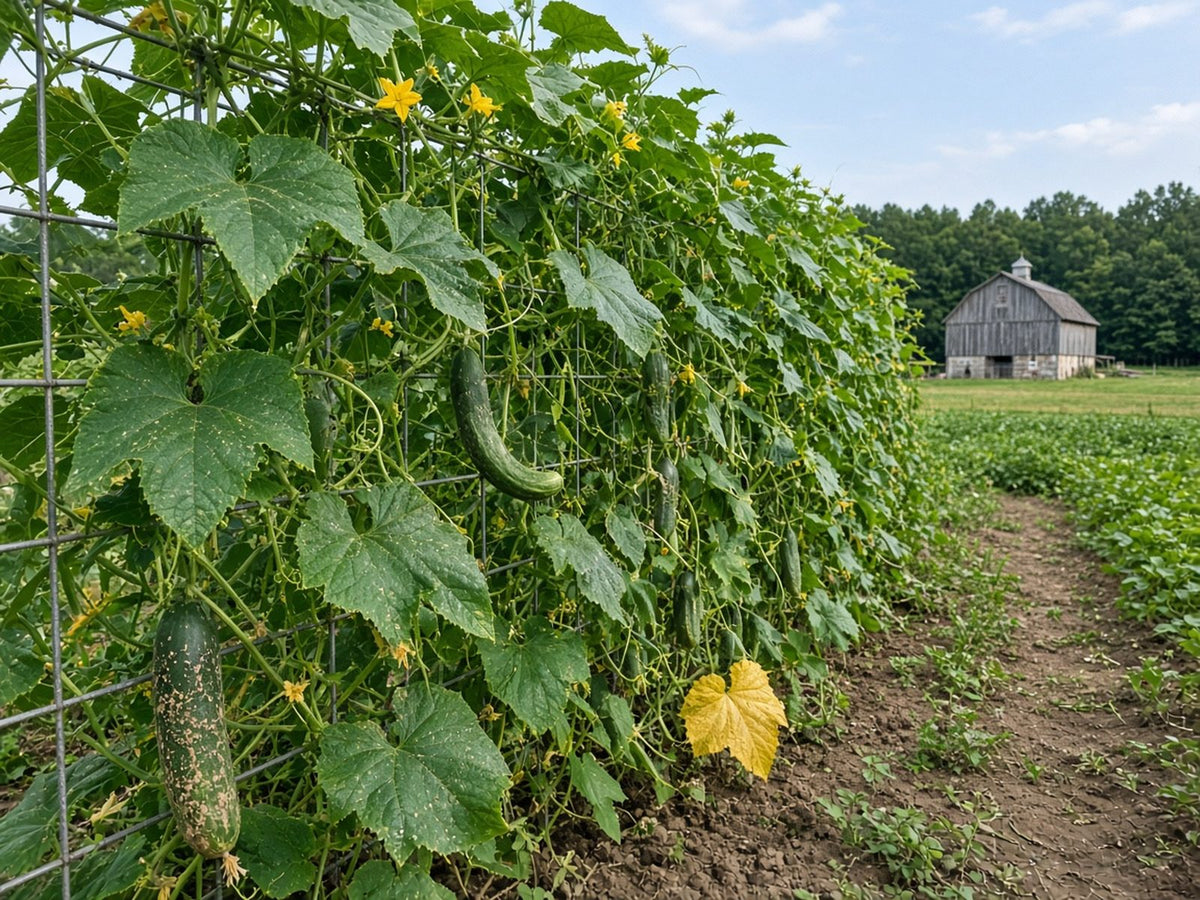
Cucumbers grow fast and produce heavily once summer heat arrives. A short row or a single trellis can give you more slicers and picklers than you can eat.
They are very tender to frost and won't germinate in cold soil, so patience at planting time pays off more than anything else.
Cucumber quick facts
| Plant type | Very tender warm-season annual |
|---|---|
| Sun | Full sun, at least 6 hours |
| Soil temperature to sow | At least 70°F at 1 inch deep |
| Sowing depth | About ½ inch |
| Spacing | Thin to 8–12 inches; hills 5–6 ft apart |
| Days to maturity | About 50–65 days from seed |
| Trellis | 3–4 ft trellis saves space and gives straight fruit |
| Start indoors | Optional, 3 weeks before planting |
| Harvest size | Picklers 2–4 in; slicers 5–8 in |
When to plant cucumbers
Direct sow after your last frost date once the soil is at least 70°F at a one-inch depth; check with a soil thermometer. You can also plant a second crop around early July for late-summer picking.
By zone:
- Cold zones (about 3–5): wait for warm soil, often late spring; black plastic mulch helps warm the bed.
- Mid zones (about 6–7): sow after frost and again in early summer.
- Warm zones (about 8–10): sow in spring and again for fall; give plants consistent water in heat.
Where to grow cucumbers
Choose full sun and fertile, well-drained soil. Vining cucumbers sprawl two or three feet on each side of a row unless you train them up a trellis or fence, which saves space, keeps fruit clean and straight and makes picking easier. Bush types fit small beds and containers.
How to sow cucumber seeds

Starting seeds indoors
Cucumbers can be started indoors about three weeks before planting time, but handle them gently and disturb the roots as little as possible. Transplants set into cold soil grow poorly, so wait for warm weather either way.
Direct sowing, step by step
- Wait until the soil is at least 70°F at 1 inch deep.
- Sow seeds about ½ inch deep, 2 inches apart in rows, or 3–4 seeds per hill.
- Keep the soil moist until seedlings emerge.
- Thin to 8–12 inches apart by cutting extras with scissors.
- Install a trellis at planting time if you are growing vines vertically.
Direct seeding is the best way to start cucumbers. Space hills 5–6 feet apart. Bush types can go in rows or hills only 2–3 feet apart. If you mulch with straw or compost, wait until the soil is above 75°F, since organic mulch slows soil warming.
Caring for cucumbers

Watering
Keep the root zone moist by watering deeply and regularly in dry spells, and more often once fruit begins to develop. Drought stress causes bitter, misshapen fruit.
Feeding
Cucumbers have moderate nutrient needs. Side-dress about a week after blossoming begins and again three weeks later if needed.
Training
Guide young vines onto the trellis; tendrils take it from there. Trellised plants can be spaced closer and yield more per square foot.
Pests and diseases
Cucumber beetles are the main pest, and they spread bacterial wilt. Powdery mildew, anthracnose, leaf spot and spider mites also show up. Row covers on young plants (removed at flowering for pollination), resistant varieties and keeping weeds down all help.
Harvesting cucumbers

Pick often: pickling cucumbers at 2–4 inches, slicers at 5–8 inches depending on the variety. Leaving overgrown fruit on the vine slows new production. Cut rather than pull the fruit. Cucumbers keep best around 50–55°F with high humidity, which is warmer than a typical fridge.
Saving cucumber seeds
Seed for saving comes from fruit left to grow fully ripe, yellow and soft, on the vine. Only open-pollinated varieties come true, and different cucumber varieties cross readily.
Choosing a cucumber variety
Cucumbers come as slicing and pickling types, dwarf or bush types, and Armenian and Asian types. Burpless cucumbers are long and slender with tender skin. Long-vined varieties may need a trellis; bush types fit better in a small garden.
Pay attention to flowering type. Standard varieties produce many male flowers for each female flower and need bees for pollination. Gynoecious (all or mostly female) varieties can yield heavily but need a standard variety nearby for pollen; seed of one is usually included in the packet. Parthenocarpic varieties set seedless fruit without pollination. If disease has been a problem in your garden, choose resistant or tolerant varieties.
Cucumber growing FAQ
When should I plant cucumber seeds?
After your last frost, once the soil is at least 70°F at one inch deep.
Why are my cucumbers bitter?
Heat and drought stress are common causes. Water deeply and consistently, especially once fruit sets.
Do cucumbers need a trellis?
No, but trellising vining types saves space, keeps fruit clean and straight, and makes picking easier.
Why are my cucumber flowers falling off?
Cucumbers produce male flowers first, and those drop naturally. Fruit forms on female flowers after pollination by bees.
How often should I pick cucumbers?
Every day or two at peak season. Regular picking keeps plants producing.
Shop cucumber seeds
Download the printable one-page cucumber guide (PDF)
Related growing guides
- How to Grow Carrots from Seed
- How to Grow Tomatoes from Seed
- How to Grow Lettuce from Seed
- How to Grow Radishes from Seed
- How to Grow Peppers from Seed
- How to Grow Spinach from Seed
See every guide in the Vegetable Library or the Grower's Library.
Sources: University of Minnesota Extension, Growing cucumbers; University of Maryland Extension, Growing cucumbers in the home garden. Planting dates vary with your local frost dates; check your county extension office for local timing.