
Vegetable Growing Guide
How to Grow Peppers from Seed
Grow sweet and hot peppers from seed: start indoors 8–10 weeks early with bottom heat, transplant into warm soil, and harvest green or fully ripe.
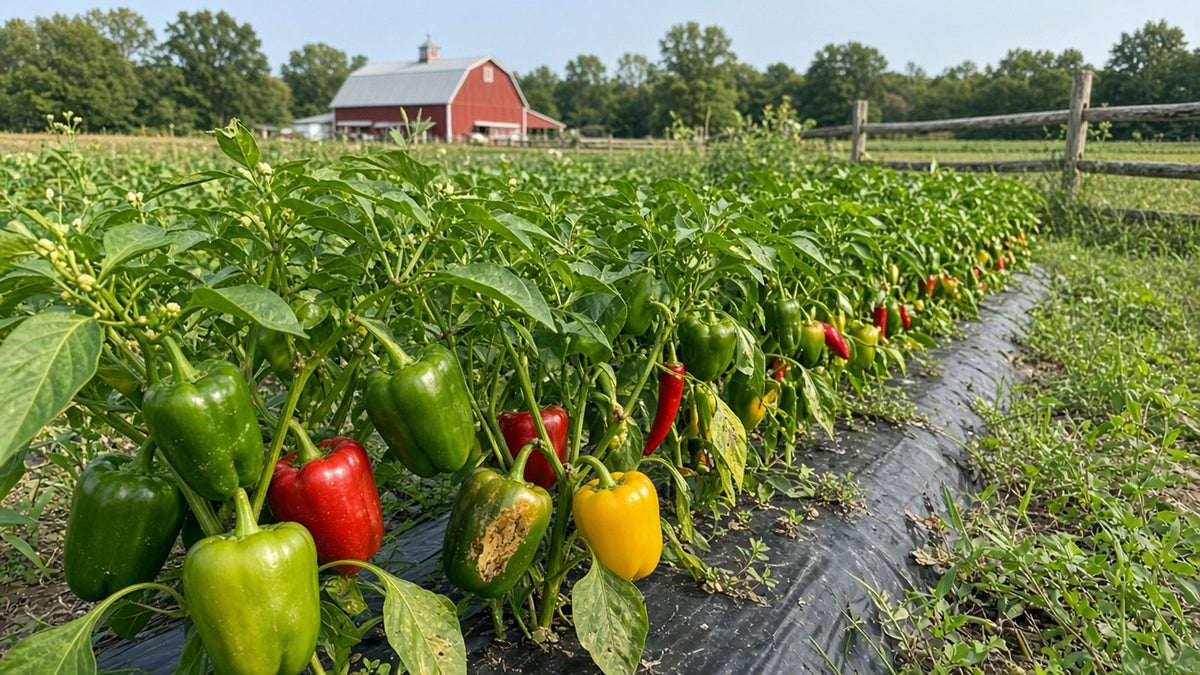
Peppers, from crisp bells to fiery habaneros, are slow starters that reward patience. They need a longer head start indoors than tomatoes, plenty of warmth, and soil that has truly heated up before they go outside.
Get those basics right and a few plants will keep producing until frost. Sweet peppers turn from green to red, yellow or orange as they ripen; hot peppers grow more pungent the longer they hang.
Pepper quick facts
| Plant type | Very tender warm-season perennial grown as an annual |
|---|---|
| Sun | Full sun, 6+ hours; some late-afternoon shade helps in hot climates |
| Start indoors | About 8–10 weeks before transplanting (some types 12) |
| Sowing depth | ¼ inch |
| Germination temperature | 80–90°F (use a heat mat) |
| Transplant when | Nights stay above 50°F; soil 65–70°F |
| Spacing | About 18 inches apart, rows 30–36 inches |
| Days to maturity | Most types 70–85 days from transplant; habaneros 90–120 |
| Ripening | Bells need 2–3 more weeks to color fully |
When to plant peppers
Start pepper seeds indoors about eight to ten weeks before your transplant date, which is earlier than tomatoes. Some hot types need closer to twelve weeks. Transplant only once nighttime lows stay above 50°F and the soil has warmed to about 65°F. Peppers set into colder soil 'just sit there' for weeks.
By zone:
- Cold zones (about 3–5): start early, transplant late, and choose shorter-season varieties; black plastic mulch helps warm the soil.
- Mid zones (about 6–7): transplant a week or two after your last frost, once nights are warm.
- Warm zones (about 8–10): plant in spring; in midsummer heat, fruit set can stall until temperatures ease.
Where to grow peppers
Choose a warm, sunny bed with fertile, well-drained soil. In very hot areas, a spot with a little late-afternoon shade helps, because evening temperatures above 75°F can slow or stop fruit set. Rotate peppers away from beds where tomatoes, eggplant or potatoes grew recently. Compact varieties grow well in large containers.
How to sow pepper seeds

Starting seeds indoors
Sow seeds ¼ inch deep in sterile, soilless germination mix. Peppers germinate best warm: keep the flats at 80–90°F with a heat mat until seedlings emerge, checking moisture often. Then grow them at about 70°F under bright light. If plants start to flower indoors, pinch off the buds until just before transplanting. Reduce watering slightly once plants are 4–5 inches tall and six to eight weeks old, then harden them off over a week or two, bringing them in if nights drop below 55°F.
Direct sowing, step by step
- Sow seeds ¼ inch deep indoors 8–10 weeks before your transplant date.
- Keep the mix at 80–90°F until seedlings emerge.
- Grow seedlings under bright light at about 70°F and pinch off early flower buds.
- Harden off over 1–2 weeks once nights stay above 55°F.
- Transplant after nights are above 50°F, about 18 inches apart in rows 30–36 inches apart.
Direct sowing isn't practical for most gardens because peppers need such a long, warm season. Use transplants. If buying plants, choose sturdy ones with pencil-thick stems and closely spaced leaves, with no spots.
Caring for peppers

Watering
If you don't get an inch of rain a week, soak the soil thoroughly at least once a week. Even moisture helps prevent blossom-end rot. Dry soil, temperatures above 90°F, or nights below 60°F or above 70°F can weaken growth and fruit set.
Feeding
Work compost in before planting and fertilize according to a soil test. Closer spacing calls for fertilizer at planting and during the summer.
Support and pinching
Pinching out early flowers and tiny fruit gives stronger, more productive plants. Heavily laden plants may need a short stake or cage.
Pests and diseases
Aphids, cutworms, hornworms, stink bugs and European corn borer are listed among pepper pests, with anthracnose and leaf spot among the diseases. Blossom-end rot is a physiological problem tied to uneven moisture.
Harvesting peppers

Pick peppers at any usable size. Bell peppers reach mature green about 70–80 days after transplanting and need another two to three weeks to turn fully red, yellow or orange. Cut fruit with pruners rather than pulling, since stems snap easily. Before a killing frost, you can pull whole plants and hang them upside down in a garage to ripen the remaining fruit. Peppers store best at about 45–50°F for two to three weeks.
Saving pepper seeds
Peppers are mostly self-pollinating, but insects can cross varieties, especially hot and sweet types grown close together. Save seed from fully ripe fruit of open-pollinated varieties.
Pepper growing FAQ
How early should I start pepper seeds?
About eight to ten weeks before transplanting, and up to twelve for some hot types. That is earlier than tomatoes.
Why won’t my pepper seeds germinate?
Cool temperatures are the usual reason. Peppers germinate best at 80–90°F, so use a heat mat.
Why are my pepper plants not setting fruit?
Very hot weather, especially warm nights above about 75°F, can stop fruit set. It usually resumes when temperatures moderate.
Are green peppers just unripe red peppers?
For most bell varieties, yes. Green is the mature-green stage, and fruit left two to three weeks longer turns its ripe color.
Can I grow peppers in pots?
Yes. Compact varieties do well in large containers with steady watering.
Shop pepper seeds
Download the printable one-page pepper guide (PDF)
Related growing guides
- How to Grow Carrots from Seed
- How to Grow Tomatoes from Seed
- How to Grow Lettuce from Seed
- How to Grow Cucumbers from Seed
- How to Grow Radishes from Seed
- How to Grow Spinach from Seed
See every guide in the Vegetable Library or the Grower's Library.
Sources: University of Minnesota Extension, Growing peppers; University of Maryland Extension, Growing peppers in the home garden. Planting dates vary with your local frost dates; check your county extension office for local timing.