
Vegetable Growing Guide
How to Grow Spinach from Seed
Grow spinach from seed in spring and fall: sow in cool soil, succession plant, thin for full leaves, avoid bolting and harvest again and again. Full guide.
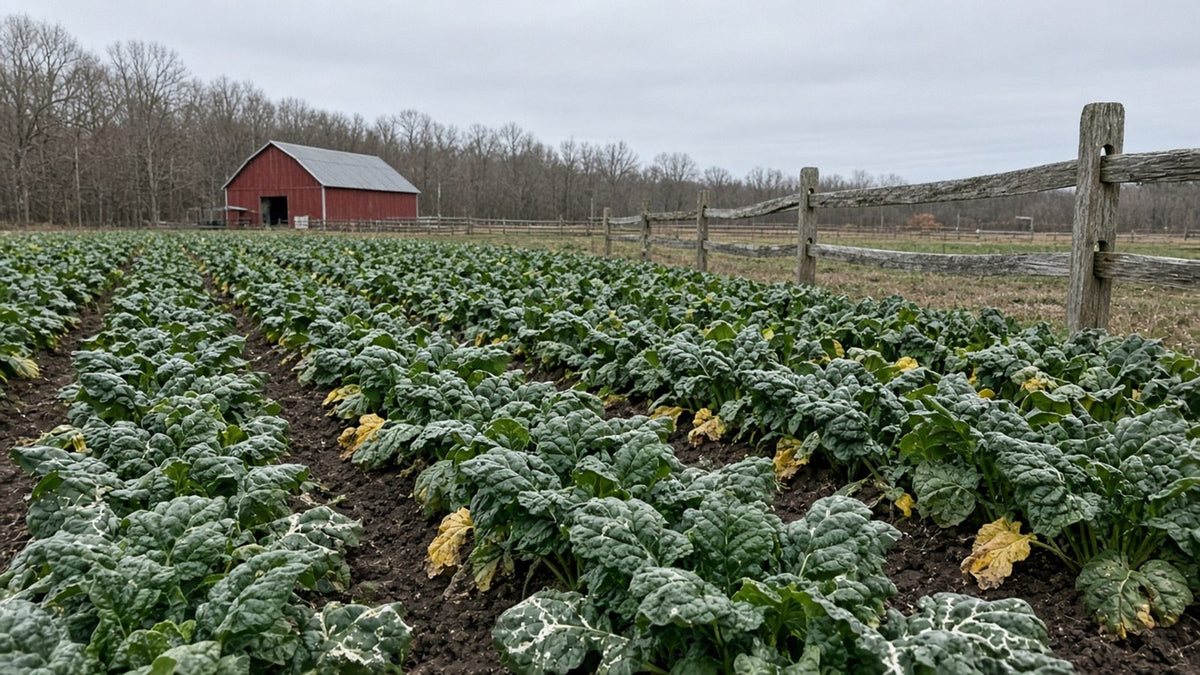
Spinach is one of the hardiest vegetables you can grow. It germinates in cold soil, shrugs off heavy frost and is often sweeter in the cool days of fall.
It does have one quirk: spinach is day-length sensitive. As spring days lengthen and warm up, it sends up a flower stalk (bolts). So sow early, sow often, and plan a fall crop.
Spinach quick facts
| Plant type | Hardy annual; withstands heavy frost |
|---|---|
| Sun | Full sun in spring and fall; tolerates partial shade (4–6 hours) |
| Soil temperature to sow | At least 45°F |
| Sowing depth | ¼–½ inch |
| Spacing | Thin to 2–4 inches, later to about 6 inches |
| Row spacing | 18–30 inches (or wide rows) |
| Days to maturity | About 28–55 days from seed |
| Succession | Every 1–2 weeks until temperatures reach about 80°F |
| Fall crop | Sow about two months before your first fall frost |
When to plant spinach
Sow spinach as soon as the soil can be worked in spring and has reached about 45°F. For a steady supply, sow again every one to two weeks until daytime temperatures reach about 80°F. For fall, sow about two months before your first fall frost. With protection, fall spinach can be harvested into early winter, and in mild areas spinach sown in late fall overwinters and regrows in spring.
By zone:
- Cold zones (about 3–5): sow in early spring and again in late summer; cover fall plantings for a longer harvest.
- Mid zones (about 6–7): spring and fall crops; late-fall sowings can overwinter under cover.
- Warm zones (about 8–10): grow spinach fall through early spring; it bolts quickly in heat.
Where to grow spinach
Spinach grows well in full sun in spring and fall and tolerates partial shade with four to six hours of direct light, which helps late-spring plantings. Give it fertile, well-drained soil that holds moisture. Wide rows or beds make good use of space.
How to sow spinach seeds

Starting seeds indoors
Spinach is usually direct sown, but you can start it indoors at normal room temperature (use a heat mat if your house is cold) and transplant it four to six inches apart. Harden seedlings off for two to three days and transplant on an overcast day.
Direct sowing, step by step
- Sow as soon as the soil is workable and about 45°F.
- Plant seeds ¼–½ inch deep in rows or wide beds.
- Keep the soil evenly moist until seedlings emerge.
- Thin to 2–4 inches apart, then to about 6 inches apart, eating the thinnings.
- Sow again every 1–2 weeks until the weather turns hot, and again in late summer for fall.
Make several small plantings a few days apart instead of one large one, so you aren't swamped with spinach that bolts all at once. Closer spacing gives smaller, 'baby' leaves.
Caring for spinach

Watering
Keep the soil uniformly moist and water deeply in dry periods. Moisture stress encourages bolting.
Feeding
Spinach grows quickly in fertile soil. Fertilize according to a soil test; a nitrogen side-dressing can help on poor soils.
Weeding and mulch
Remove young weeds by hand and mulch along the rows to keep weed seeds from germinating.
Pests and diseases
Leaf miners, which tunnel inside leaves, are a common spinach pest, along with flea beetles, cutworms and slugs. Downy mildew and leaf spot are the main diseases. Row covers, good spacing and removing affected leaves help.
Harvesting spinach

Pick individual outer leaves once they're big enough to use, which encourages new leaves from the crown, or cut the whole plant. Harvesting at the baby-leaf stage allows several cuttings. Harvest everything once plants start to bolt, because leaves turn bitter. Spinach keeps two to three weeks in very cold, humid storage.
Saving spinach seeds
Spinach plants are either male or female and are wind-pollinated, so saving seed requires growing a sizable patch of a single open-pollinated variety.
Choosing spinach types
Common spinach comes in smooth-leaf and savoy (crinkled) types. Savoy leaves have more texture, but soil tends to catch in the crinkles. Both bolt as day length and temperature increase. For summer greens, try heat-tolerant substitutes: Swiss chard is a biennial that won't bolt in summer heat, and New Zealand and Malabar spinach prefer hot weather.
Spinach growing FAQ
Why does my spinach bolt so quickly?
Spinach responds to lengthening days and heat. Sow early in spring, choose slow-bolting varieties, and grow a fall crop when days are shortening.
Can spinach survive frost?
Yes. It is a hardy annual that withstands heavy frost, and with protection it can be harvested into winter.
How deep do I plant spinach seeds?
About ¼–½ inch deep.
Can I grow spinach in shade?
It tolerates partial shade, with four to six hours of direct light, which can help in late spring.
Is New Zealand spinach the same thing?
No. New Zealand spinach and Malabar spinach are different plants that like heat and are planted after frost.
Shop spinach seeds
Download the printable one-page spinach guide (PDF)
Related growing guides
- How to Grow Carrots from Seed
- How to Grow Tomatoes from Seed
- How to Grow Lettuce from Seed
- How to Grow Cucumbers from Seed
- How to Grow Radishes from Seed
- How to Grow Peppers from Seed
See every guide in the Vegetable Library or the Grower's Library.
Sources: University of Minnesota Extension, Growing spinach and Swiss chard; University of Maryland Extension, Growing spinach in the home garden; University of Minnesota Extension, Planting the vegetable garden. Planting dates vary with your local frost dates; check your county extension office for local timing.