
Vegetable Growing Guide
How to Grow Peas from Seed
Grow shelling, snow and sugar snap peas from seed: sow early in cool soil, trellis tall vines, water at bloom and harvest at peak sweetness. Full guide.
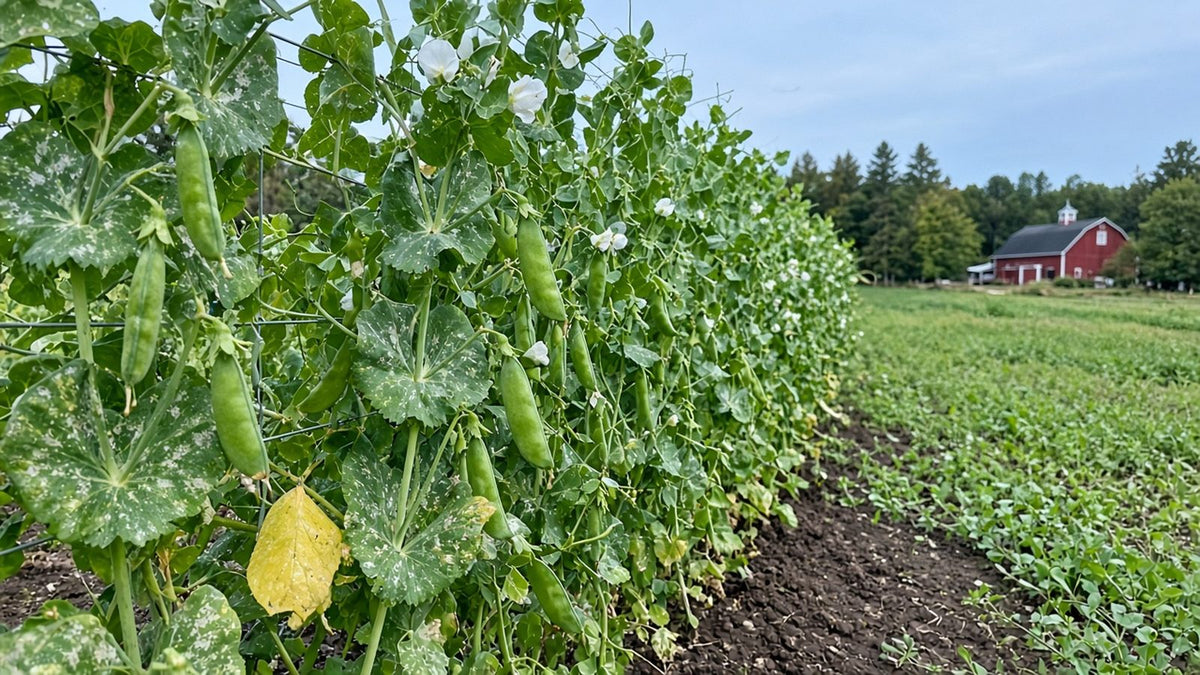
Peas are one of the first crops of the year. They germinate in cool soil, young plants shrug off light frost, and fresh-picked peas are sweeter than anything you can buy.
The catch is heat. Peas stop flowering and setting pods once temperatures climb above about 85°F, so the whole game is getting them in early.
Pea quick facts
| Plant type | Cool-season annual |
|---|---|
| Sun | Full sun |
| Soil temperature to sow | About 40–50°F and up |
| Sowing depth | 1 inch |
| Spacing | About 2 inches apart in all directions (wide rows) or in single rows |
| Growing temperature | Best at 55–65°F; stops producing above about 85°F |
| Days to harvest | About 60 days for most varieties |
| Support | Trellis for tall vines (up to 5 ft) |
| Water | At least 1 inch per week |
When to plant peas
Sow peas as early in spring as the soil can be worked; they can be direct sown once soil temperatures are in the 40s°F. In cold-climate planting calendars, peas go in from mid-April to early May. Make a second and third sowing a week apart for a longer harvest. Preparing the bed the previous fall makes early planting easier.
By zone:
- Cold zones (about 3–5): sow as soon as the soil thaws and dries enough to work.
- Mid zones (about 6–7): sow in late winter to early spring; a late-summer sowing can give a fall crop.
- Warm zones (about 8–10): sow in fall or late winter so peas mature before hot weather.
Where to grow peas
Peas need full sun, even though they dislike heat. Choose well-drained soil; peas rot in cold, waterlogged ground. Tall vining varieties grow up to five feet and need a trellis of stakes with string or netting. Shorter bush types can grow in a 12–18-inch-wide row where the plants hold each other up.
How to sow pea seeds

Starting seeds indoors
Not needed. Peas are direct sown early in the season.
Direct sowing, step by step
- Set up a trellis first for tall varieties.
- Sow seeds in a shallow trench or wide row, about 2 inches apart.
- Cover with 1 inch of soil and firm it down.
- Water to keep the soil moist but not soggy.
- Make another sowing a week later, and a third a week after that, to stretch the harvest.
Handle seed gently: cracked seeds rarely germinate in cool, moist spring soil. Some seed is treated with fungicide to help germination in cold soil; untreated seed is best sown once the soil warms slightly.
Caring for peas

Watering
Soak the soil to a depth of at least one inch of water each week during the growing season, especially while flowering and filling pods.
Feeding
Peas generally need little fertilizer. Fertilize only according to a soil test.
Weeding and mulch
Pea roots grow close to the surface, so cultivate shallowly. Mulching 3–4 inches deep with grass clippings or weed-free straw keeps soil moist and cool and suppresses weeds.
Pests and diseases
Extension sources list aphids, cutworms, powdery mildew, root rots and white mold. Disease-resistant varieties, well-drained soil and early planting (before mildew-friendly summer weather) help.
Harvesting peas

Shelling peas: once the pods begin to fill, sample daily and pick when the peas are full-sized, just larger than the seed you planted. Snow peas: pick when the pods reach full length with only tiny traces of peas inside. Sugar snaps: pick when the pods look almost filled but are still juicy and tender. Pea quality drops quickly past maturity, so pick often. Chill peas right away; dunking them in cold water and then refrigerating keeps them sweet.
Saving pea seeds
Peas self-pollinate, so open-pollinated varieties come true. Leave some pods on the vine until they dry and rattle, then shell and store the seed cool and dry.
Choosing pea varieties
Tall vining peas can reach five feet and need a trellis, but they produce over a longer period. Shorter bush types grow two to three feet and set their crop all at once. Leafless and semi-leafless types may be less prone to disease and tend to hold each other up. Nearly all pea varieties are open-pollinated, so you can save the seed.
Snow pea pods are eaten flat, with only tiny traces of peas inside. Sugar snap peas are picked when the peas are nearly mature and the pods are still juicy. The tender shoot tips are edible too.
Pea growing FAQ
How early can I plant peas?
As soon as the soil can be worked in spring; peas can be sown when soil temperatures are in the 40s°F.
Do peas need a trellis?
Tall vining types (up to about five feet) need one. Short bush types can support each other in a wide row.
Why did my peas stop producing?
Heat. Peas stop flowering and setting pods once temperatures rise above about 85°F.
How deep do I plant pea seeds?
About 1 inch deep.
When are sugar snap peas ready?
When the pods look almost filled with peas but are still sweet, juicy and tender.
Shop pea seeds
Download the printable one-page pea guide (PDF)
Related growing guides
- How to Grow Carrots from Seed
- How to Grow Tomatoes from Seed
- How to Grow Lettuce from Seed
- How to Grow Cucumbers from Seed
- How to Grow Radishes from Seed
- How to Grow Peppers from Seed
See every guide in the Vegetable Library or the Grower's Library.
Sources: University of Minnesota Extension, Growing peas; University of Minnesota Extension, Planting the vegetable garden. Planting dates vary with your local frost dates; check your county extension office for local timing.