
Vegetable Growing Guide
How to Grow Okra from Seed
Grow okra from seed: soak or nick seeds, sow in 65°F soil, space for tall plants, water at bloom and pick pods at 2–4 inches every few days.
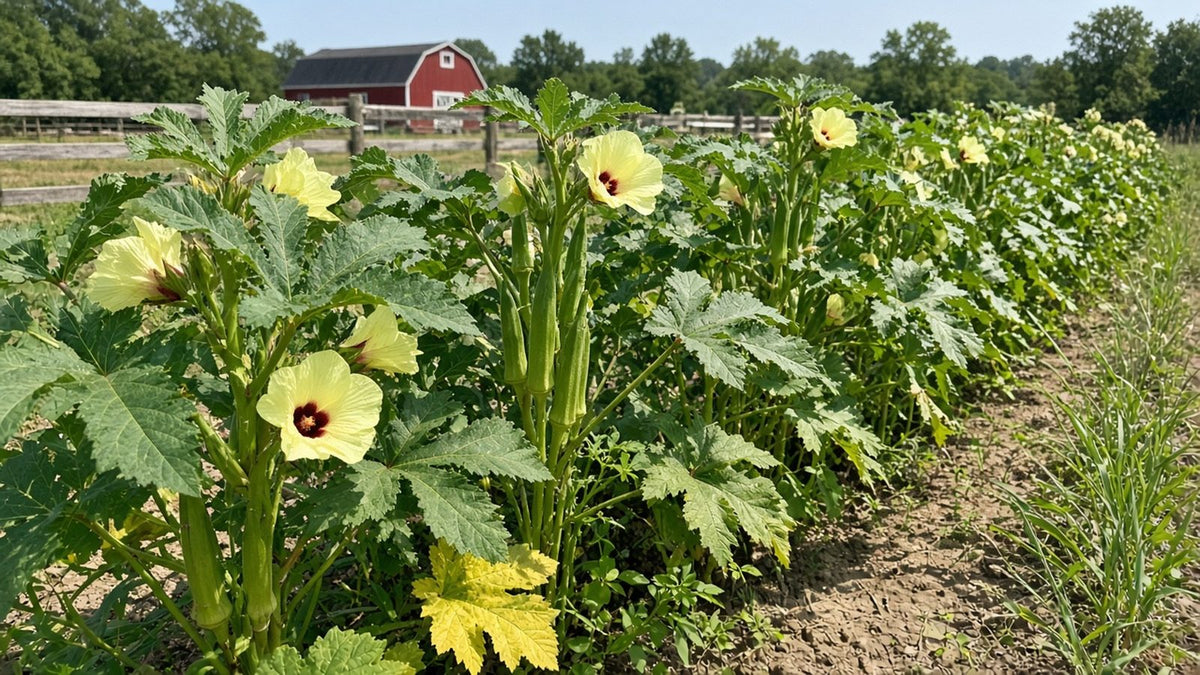
Okra thrives in the kind of heat that makes other vegetables wilt. Tall plants with hibiscus-like flowers produce pods from midsummer until fall, in green, creamy white or burgundy depending on the variety.
Two habits make okra a success: wait for truly warm soil before sowing, and pick the pods young, every day or two.
Okra quick facts
| Plant type | Very tender warm-season annual |
|---|---|
| Sun | Full sun |
| Soil | Well-drained, high in organic matter; pH 5.8–6.8 |
| Soil temperature to sow | About 65°F (2–3 weeks after last frost) |
| Seed prep | Soak several hours or overnight (or nick the seed coat) |
| Sowing depth | 1 inch |
| Spacing | Sow 4–6 in apart; plants 12–18 in; rows 3–4 ft |
| Days to harvest | About 60–70 days from sowing (50–60 from transplant) |
| Harvest size | Pods 2–4 inches long |
When to plant okra
Sow okra outdoors once the soil has warmed to 65°F, usually two to three weeks after your last frost. For an earlier harvest, start seed indoors five to six weeks before all danger of frost has passed.
By zone:
- Cold zones (about 3–5): start indoors and transplant into warm soil, ideally through black plastic; choose quick varieties.
- Mid zones (about 6–7): direct sow in late spring once the soil is warm.
- Warm zones (about 8–10): sow from late spring through early summer; okra produces until fall.
Where to grow okra
Okra does best in full sun. It prefers well-drained, sandy soils high in organic matter but grows in many soil types. Plants can grow 6–10 feet tall, so place okra at the north side of the garden where it won't shade shorter crops. Running rows east to west helps capture sun.
How to sow okra seeds

Starting seeds indoors
Sow seeds indoors five to six weeks before frost danger ends, using individual pots to limit root disturbance, and transplant into warm soil.
Direct sowing, step by step
- Soak seeds in water for several hours or overnight, or nick the hard coat with sandpaper.
- Wait until the soil is about 65°F.
- Sow seeds 1 inch deep and 4–6 inches apart in rows about 3 feet apart.
- Keep the soil moist until seedlings emerge.
- Thin to 12–18 inches apart once seedlings are established.
Okra's hard seed coat can make germination slow and uneven. Scratching seeds lightly with sandpaper (scarification) and soaking them for 12–24 hours improves it.
Caring for okra

Watering
Okra tolerates dry spells, but moisture is especially important during flowering and pod development. In long dry periods, give a deep soaking of 1–1½ inches of water every seven to ten days.
Feeding
Base fertilizer on a soil test. Without one, extension guidance suggests a general preplant fertilizer and two light side-dressings during the season.
Pinching
When plants are about 24 inches tall, pinching off the growing points promotes branching and can increase yields.
Pests and diseases
Corn earworms, cucumber beetles and root-knot nematodes are among the pests listed; powdery mildew can appear late in the season.
Harvesting okra

Pick pods young and tender at 2–4 inches long, about one to three days after the flowers open, before they turn woody. Check plants every day or two in peak season and remove any over-mature pods so the plants keep blooming. Round-podded varieties stay tender at larger sizes. Many plants are spiny, so wear gloves and cut pods with clippers or a knife. Okra keeps about a week at 45–50°F with high humidity.
Saving okra seeds
Let a few pods of an open-pollinated variety dry on the plant until brown and brittle, then split them and save the seeds.
Choosing an okra variety
Okra varieties differ in plant height and pod color and shape. Most modern varieties produce spineless pods. Pod colors include green, red and yellow. Round-podded types stay tender at larger sizes than ridged types, which helps if you can't pick every day.
Tall types belong on the north edge of the bed so they don't shade other crops.
Handling and storing pods
Okra grows very fast, so check plants every few days at minimum. Pods left to mature slow production and turn tough and fibrous. Handle pods gently because they bruise easily. Store them in a moist environment at 45–50°F, or in the refrigerator for about seven days.
Okra growing FAQ
Should I soak okra seeds before planting?
Yes. Soaking for several hours or overnight, or nicking the hard seed coat, speeds and evens out germination.
When should I plant okra?
When the soil reaches 65°F, typically two to three weeks after the last frost.
Why is my okra tough and woody?
The pods were left too long. Harvest at 2–4 inches, every day or two.
How tall does okra grow?
Many varieties reach 6–10 feet, so plant where they won't shade other crops.
Can okra grow in containers?
Compact varieties can, in a large container in full sun with regular watering.
Shop okra seeds
Download the printable one-page okra guide (PDF)
Related growing guides
- How to Grow Carrots from Seed
- How to Grow Tomatoes from Seed
- How to Grow Lettuce from Seed
- How to Grow Cucumbers from Seed
- How to Grow Radishes from Seed
- How to Grow Peppers from Seed
See every guide in the Vegetable Library or the Grower's Library.
Sources: University of Maryland Extension, Growing okra in the home garden; University of Georgia Extension, Home garden okra (C941). Planting dates vary with your local frost dates; check your county extension office for local timing.