
Flower Growing Guide
How to Grow Love-in-a-Mist from Seed
Grow love-in-a-mist (Nigella damascena) from seed: sow directly in fall or early spring, succession-sow, and cut the striped seed pods for dried bouquets.
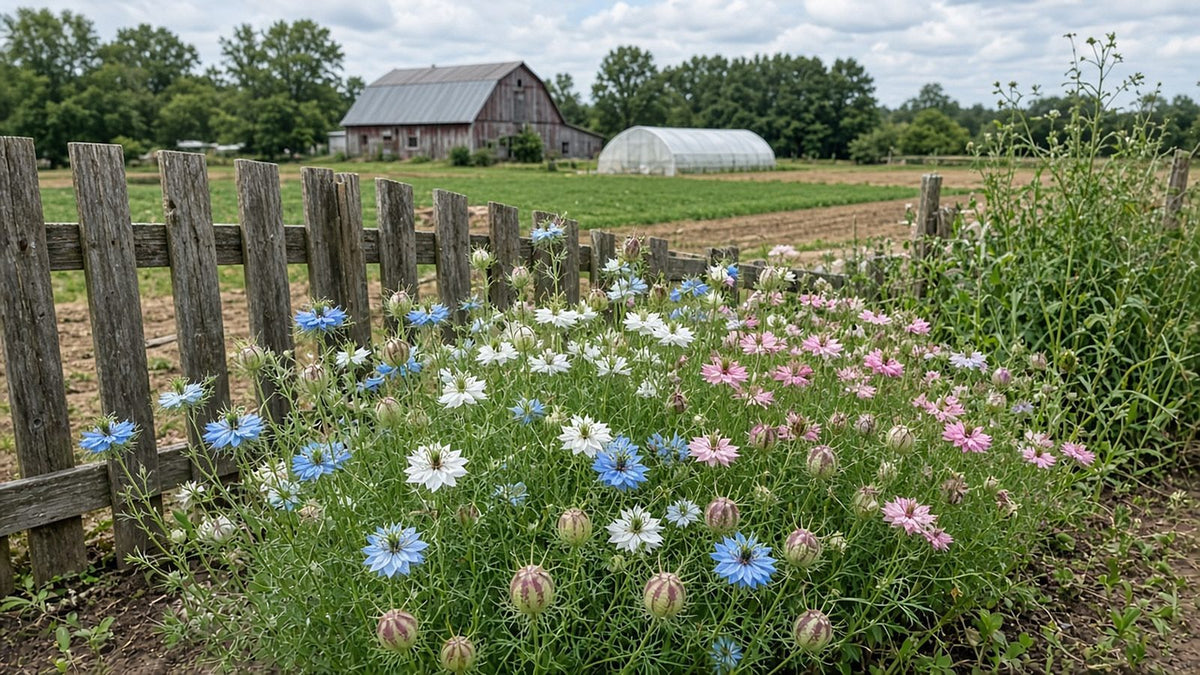
Love-in-a-mist (Nigella damascena) is an old-fashioned cool-season annual with sky-blue, white, pink or lavender flowers set in a haze of fine, feathery bracts. The flowers are followed by striped, balloon-shaped seed pods that are just as decorative, fresh or dried.
Plants grow 15–24 inches tall, bloom in late spring and early summer, and self-sow freely. They resent transplanting, so it is a flower best sown right where it will grow.
Love-in-a-mist quick facts
| Plant type | Hardy annual |
|---|---|
| Botanical name | Nigella damascena |
| Sun | Full sun; tolerates light shade |
| Sowing depth | Barely cover, about ⅛ inch |
| Germination | About 10–15 days in cool soil |
| Spacing | 6–10 inches |
| Height | 15–24 inches |
| Sowing time | Fall, or early spring as soon as soil can be worked |
| Transplanting | Not recommended; direct sow |
When to plant love-in-a-mist
Love-in-a-mist does best when sown in fall or very early spring. Young seedlings are cold-hardy. In spring, sow as soon as the soil can be worked, then again every three to four weeks until early summer in areas with cool summers, since each sowing flowers for only a few weeks.
By zone:
- Cold zones (about 3–5): sow in early spring, with repeat sowings into June; fall sowing also works in many areas.
- Mid zones (about 6–7): sow in fall or late winter for strong spring plants.
- Warm zones (about 8–10): sow in fall for spring bloom; plants finish when the heat arrives.
Where to grow love-in-a-mist
Choose full sun and well-drained soil with steady moisture. Love-in-a-mist tolerates most soils. It is ideal for filling gaps in borders and cottage gardens, between perennials or in a cutting bed, and works in containers and window boxes.
How to sow love-in-a-mist seeds

Starting seeds indoors
Indoor starting is not recommended because plants dislike root disturbance. If you must, sow in biodegradable pots three to four weeks before planting out and plant the whole pot without disturbing the roots.
Direct sowing, step by step
- Rake the bed to a fine surface.
- Scatter seed thinly and cover with about ⅛ inch of fine soil.
- Keep the soil moist until seedlings appear.
- Thin to 6–10 inches apart.
- Sow another patch every three to four weeks in spring.
Direct sowing is the way to grow nigella. Once established, plants self-sow and come back on their own each year.
Caring for love-in-a-mist

Watering
Keep the soil evenly moist, especially during dry spring weather.
Feeding
No fertilizer is usually needed.
Deadheading
Removing faded flowers prolongs blooming, but leave some to form the decorative pods.
Pests and diseases
Love-in-a-mist has few problems. Plants naturally yellow and die after setting seed in summer heat.
Cutting and enjoying love-in-a-mist

For fresh bouquets, cut stems when the flowers are just opening. For dried arrangements, let the seed pods inflate and color up, then cut and hang them upside down in a dry, shady place. The pods keep their purple and green stripes well.
Saving love-in-a-mist seeds
Let some pods dry on the plant until they turn papery and rattle. Cut them, break them open and pour the small black seeds into an envelope. Seeds stay viable for a couple of years in storage.
Love-in-a-mist and black cumin
A related species, Nigella sativa, produces the black seeds used as a spice, sometimes called black cumin or kalonji. Love-in-a-mist (N. damascena) is the ornamental species, grown for flowers and pods. Its seeds are not the culinary spice.
Companions for love-in-a-mist
Its fine foliage looks lovely beneath taller spring flowers such as larkspur, cornflowers and snapdragons, and between perennials that are slow to fill in. Sow it among tulips and other bulbs: the feathery seedlings hide fading bulb leaves, and the blue flowers follow right after.
Love-in-a-mist growing FAQ
When should I sow love-in-a-mist?
In fall or early spring as soon as the soil can be worked. Repeat sowings extend the bloom season.
Can I transplant love-in-a-mist?
It dislikes transplanting. Sow directly where you want it to grow.
Does love-in-a-mist come back every year?
It is an annual but self-sows freely, so new plants usually return each spring.
How do I dry nigella pods?
Cut them when they are fully inflated and colored, then hang them upside down in a dry, shady place.
Is love-in-a-mist good for pollinators?
Yes. Bees visit the open flowers readily, and plants combine well with other spring annuals in pollinator plantings.
Shop love-in-a-mist seeds
Download the printable one-page love-in-a-mist guide (PDF)
Related growing guides
- How to Grow Annual Baby's Breath from Seed
- How to Grow Candytuft from Seed
- How to Grow Calendula from Seed
- How to Grow Delphiniums from Seed
- How to Grow Cosmos from Seed
See every guide in the Flower Library or the Grower's Library.
Sources: University of Wisconsin–Madison Extension, Love-in-a-mist; NC State Extension Plant Toolbox, Nigella damascena. Planting dates vary with your local frost dates; check your county extension office for local timing.