
Flower Growing Guide
How to Grow Annual Baby's Breath from Seed
Grow annual baby's breath (Gypsophila elegans) from seed: quick to sow, cover lightly, succession-plant every few weeks for airy white filler all season.
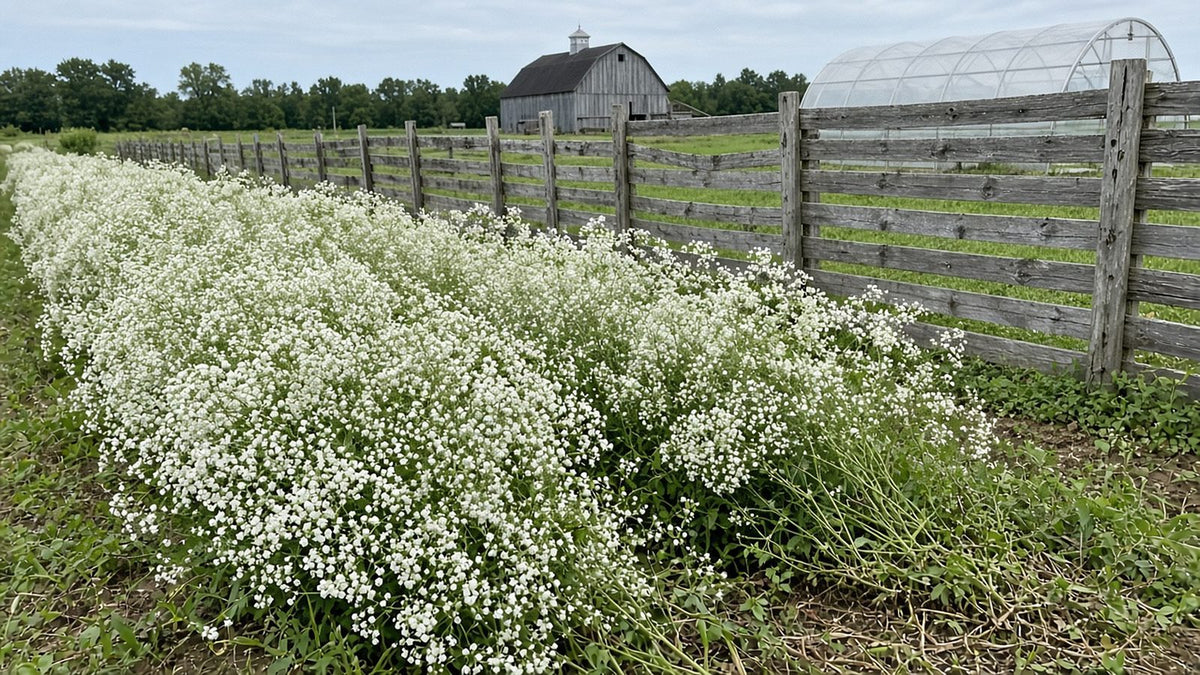
Annual baby's breath (Gypsophila elegans) makes clouds of small white or pale pink flowers on wiry stems, the classic airy filler for bouquets. The annual type has larger, more open blooms than the perennial used by florists.
It grows fast from seed, flowering within about six to eight weeks, and each sowing blooms for a few weeks. Sow a little at a time and you will have filler all season.
Baby's breath quick facts
| Plant type | Hardy annual |
|---|---|
| Botanical name | Gypsophila elegans |
| Sun | Full sun |
| Sowing depth | Lightly covered, about ⅛ inch |
| Germination | About 10–15 days |
| Spacing | 6–12 inches |
| Height | 1–2 feet |
| Succession sowing | Every 3–4 weeks until midsummer |
| Soil | Well-drained, sandy loam preferred |
When to plant baby's breath
Sow annual baby's breath outdoors in spring as soon as the soil can be worked; seedlings tolerate light frost. Repeat every three to four weeks until about July for steady flowers. In warm-winter areas, a fall sowing blooms in late winter and spring.
By zone:
- Cold zones (about 3–5): sow from mid spring, with repeat sowings into early summer.
- Mid zones (about 6–7): sow early spring through early summer; a fall sowing can overwinter in milder spots.
- Warm zones (about 8–10): sow fall through early spring; plants fade in summer heat.
Where to grow baby's breath
Baby's breath likes full sun and well-drained, sandy or loamy soil. It handles light, dry soil well but not wet feet. Partial shade is tolerated, but plants bloom less. Grow it in rows in a cutting bed, or let it weave between taller flowers in a border.
How to sow baby's breath seeds

Starting seeds indoors
Baby's breath is usually direct sown because it grows so quickly and dislikes transplanting. If you start it indoors, sow a few seeds per cell three to four weeks before planting out and transplant without breaking up the root ball.
Direct sowing, step by step
- Prepare a sunny bed with loose, well-drained soil.
- Sow seeds thinly in rows and cover with about ⅛ inch of soil.
- Keep the soil lightly moist until seedlings appear.
- Thin to 6–12 inches apart.
- Sow another short row every three to four weeks.
Because plants bloom for only a few weeks, short repeat sowings give better results than one big planting.
Caring for baby's breath

Watering
Water during dry spells while plants are young; established plants handle dry soil better than wet.
Feeding
No extra fertilizer is needed in average garden soil.
Support
Plants can lean when heavy with flowers; a little netting or brushy twigs keeps them upright.
Pests and diseases
Watch for aphids, slugs and snails. Stem and root rot can occur in wet, heavy soil.
Cutting and enjoying baby's breath

Cut stems when about half the flowers are open, early in the morning, and put them straight into water. For drying, cut when most flowers are open and hang small bunches upside down in a dry, shaded place. Baby's breath mixes well with almost any bouquet flower.
Saving baby's breath seeds
Let some stems stay on the plant until the tiny capsules are dry and brown, then shake them over a bag. Seeds are very small; store them in a labeled envelope.
Annual or perennial baby's breath?
The perennial species (Gypsophila paniculata) forms a deep-rooted plant that comes back each year and is the type sold by florists. Annual baby's breath is faster from seed and better for quick succession crops, with slightly larger flowers. Note that perennial baby's breath is considered invasive in some northern and western states, so check before planting it; the annual is the simpler choice for most gardens.
Baby's breath growing FAQ
How long does baby's breath take to grow from seed?
Annual baby's breath usually blooms about six to eight weeks after sowing.
Does baby's breath come back every year?
The annual type does not, though it may self-sow. The perennial species returns each year.
Can I grow baby's breath in pots?
Yes. Use a free-draining mix and a sunny spot, and avoid overwatering.
Why does my baby's breath flop over?
Plants grown in rich soil or partial shade get leggy. Grow in full sun and lean soil, and add light support.
Is baby's breath safe around pets?
Annual baby's breath is listed as non-toxic for cats, dogs and horses by the NC State plant toolbox, but grazing animals and pets should still not be encouraged to eat garden plants.
Shop baby's breath seeds
Download the printable one-page baby's breath guide (PDF)
Related growing guides
- How to Grow Love-in-a-Mist from Seed
- How to Grow Candytuft from Seed
- How to Grow China Asters from Seed
- How to Grow Cosmos from Seed
- How to Grow Zinnias from Seed
See every guide in the Flower Library or the Grower's Library.
Sources: NC State Extension Plant Toolbox, Gypsophila elegans. Planting dates vary with your local frost dates; check your county extension office for local timing.