
Vegetable Growing Guide
How to Grow Kale from Seed
Grow kale from seed for months of harvests: sow in spring or midsummer, space for full plants or baby leaves, control cabbage worms and pick after frost.
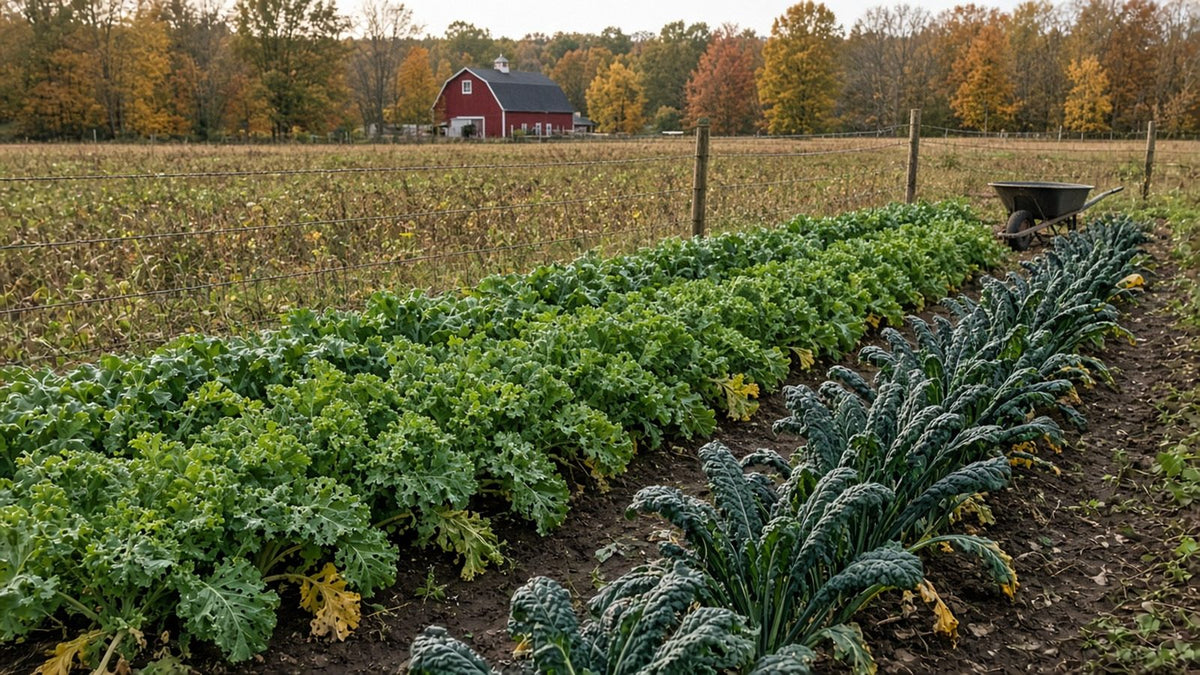
Kale is one of the longest-producing greens in the garden. One planting can keep giving leaves from late spring until well after the first fall frosts, and cool weather often improves the flavor.
It is easy from seed, either sown directly or started indoors, and fits anywhere from a container to a full bed.
Kale quick facts
| Plant type | Cool-season biennial grown as an annual; frost tolerant |
|---|---|
| Sun | Full sun |
| Sowing depth | ¼–½ inch |
| Spacing | 8–12 inches (as close as 4 inches for baby leaves) |
| Row spacing | 18–30 inches |
| When to sow | Spring (from mid-April in the North) through early summer; midsummer for fall |
| Start indoors | Optional, about 4–6 weeks before transplanting |
| Feeding | Side-dress when plants are about 4 inches tall |
| Main pests | Cabbage worms, cabbage loopers, flea beetles |
When to plant kale
Direct sow or start kale indoors in early spring. Extension planting calendars for cold climates allow sowing from mid-April through early July. For fall harvests, start seed indoors in early summer or sow directly in midsummer. Kale handles frost, so an earlier-than-expected cold snap won't end the crop.
By zone:
- Cold zones (about 3–5): sow from early spring to early summer; fall plantings keep producing after frost.
- Mid zones (about 6–7): spring and midsummer sowings; plants often carry through mild winters.
- Warm zones (about 8–10): sow late summer through winter; summer heat makes leaves tough and bitter.
Where to grow kale
Choose full sun and fertile, well-drained soil with compost worked in. Kale plants get large, so give them room. Rotate cabbage-family crops (kale, cabbage, broccoli, radish) to different beds each year to reduce soil-borne problems like clubroot.
How to sow kale seeds

Starting seeds indoors
Start seeds in seed-starting mix about four to six weeks before transplanting. No heat mat is needed; normal room temperature and bright light grow sturdy seedlings. Harden them off, then transplant about eight inches apart in rows 18 inches apart.
Direct sowing, step by step
- Prepare fertile soil in full sun.
- Sow seeds ¼–½ inch deep in rows 18–30 inches apart.
- Keep the soil moist until seedlings emerge.
- Thin to 8–12 inches apart for full-sized plants, or about 4 inches for baby leaves.
- Side-dress with fertilizer when plants are about 4 inches tall.
Direct-sown kale grows quickly once established. Use the thinnings as baby greens.
Caring for kale

Watering
Keep soil evenly moist. Plants that are overheated or struggling for water produce compounds that make the leaves pungent or bitter.
Feeding
When plants are about four inches tall, side-dress alongside the row with a nitrogen fertilizer, following the rate on the label or your soil test.
Mulch and weeds
Mulch helps keep roots cool and moist and suppresses weeds.
Pests and diseases
Cabbage worms and cabbage loopers chew holes in the leaves, and flea beetles pepper young plants with tiny holes. Floating row covers put on at planting keep most of them off. Clubroot is a soil-borne disease. Rotation and good drainage reduce it.
Harvesting kale

Begin picking once leaves are large enough to use, taking the lower, outer leaves and leaving the growing center so the plant keeps producing. Leaves are often sweeter after a frost. Baby leaves can be cut from closely spaced plants at a few inches tall.
Saving kale seeds
Kale is biennial and flowers in its second spring after overwintering. Different kale and other Brassica oleracea crops cross readily, so seed saving needs isolation.
Kale or collards?
Kale and collards are leafy forms of the same species as broccoli, cauliflower and cabbage. Collards produce large, smooth, thick leaves, while kale leaves are curly, ruffled or lobed on the edges. Both can be eaten raw when small and tender. Cook larger, tougher leaves by stewing, braising or stir-frying them, or turn them into kale chips.
Getting the best flavor
The best kale, with tender, flavorful, non-bitter leaves, comes from fast growth without heat or moisture stress. Plants that are overheated or struggling for water produce compounds that make the leaves pungent or bitter, so water through dry spells and mulch to keep the soil cool.
Both kale and collards are cold tolerant and keep producing new leaves well beyond the first fall frosts. Even after the leaves have frozen, you can harvest and cook them straight from the garden. For a fall crop, direct seed about three months before your average first fall frost.
Kale growing FAQ
Does kale survive frost?
Yes. Kale tolerates frost and keeps producing after the first fall frosts; flavor often improves in cold weather.
How far apart should I plant kale?
About 8–12 inches for full-sized plants, or as close as 4 inches if you only want baby leaves.
Why is my kale bitter?
Heat and water stress cause bitterness. Keep plants watered and grow them in spring and fall.
How do I stop holes in my kale leaves?
Cover plants with floating row covers to keep out cabbage worms, loopers and flea beetles.
Can I grow kale in containers?
Yes. Use a large pot with fertile mix and keep it watered.
Shop kale seeds
Download the printable one-page kale guide (PDF)
Related growing guides
- How to Grow Carrots from Seed
- How to Grow Tomatoes from Seed
- How to Grow Lettuce from Seed
- How to Grow Cucumbers from Seed
- How to Grow Radishes from Seed
- How to Grow Peppers from Seed
See every guide in the Vegetable Library or the Grower's Library.
Sources: University of Minnesota Extension, Growing collards and kale; University of Minnesota Extension, Planting the vegetable garden; Hennepin County Master Gardeners, Vegetables One by One. Planting dates vary with your local frost dates; check your county extension office for local timing.