
Vegetable Growing Guide
How to Grow Eggplant from Seed
Grow eggplant from seed: start indoors with bottom heat 8–10 weeks early, transplant into warm soil, stake and protect from flea beetles. Quick facts.
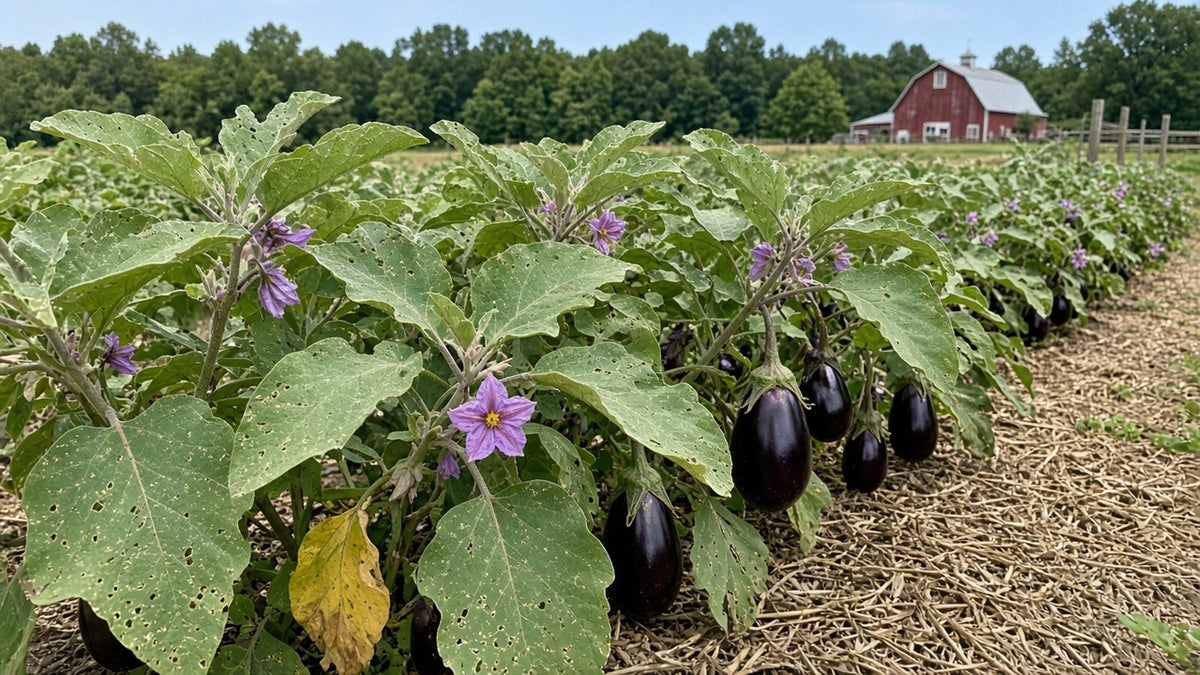
Eggplant is the most heat-loving member of the tomato family, and much less cold-hardy than tomatoes. Plants set out too early can sit stunted all summer, so warmth at every stage is the theme of this guide.
Give it heat and it pays off in glossy Italian ovals, slender Asian types and colorful heirlooms, all from a few well-grown plants.
Eggplant quick facts
| Plant type | Very tender warm-season annual |
|---|---|
| Sun | Full sun, 6+ hours; 8–10 preferred |
| Start indoors | About 8 weeks before transplanting |
| Sowing depth | ¼ inch |
| Germination temperature | 75–85°F (heat mat) |
| Transplant when | Night lows stay above 50°F; soil about 70°F |
| Spacing | 18–24 inches apart; rows 30–36 inches |
| Days to maturity | About 55–80 days from transplant |
| Main pest | Flea beetles |
When to plant eggplant
Start eggplant seeds about eight weeks before you plan to plant outside. Transplant only after nighttime lows are consistently above 50°F. Plants exposed to chill before that may never fully recover or bear well.
By zone:
- Cold zones (about 3–5): start indoors, transplant late into black plastic, and choose early or slender Asian varieties.
- Mid zones (about 6–7): transplant a couple of weeks after your last frost, once nights are warm.
- Warm zones (about 8–10): plant in spring; long, hot summers suit eggplant well.
Where to grow eggplant
Pick the warmest, sunniest spot available, with fertile, well-drained soil. Black plastic mulch or black landscape fabric warms the soil and leads to earlier harvests and higher yields. Rotate eggplant away from tomatoes, peppers and potatoes. Compact varieties grow well in large containers.
How to sow eggplant seeds

Starting seeds indoors
Sow seeds ¼ inch deep in sterile, soilless germination mix. Use a heat mat to keep flats at 75–85°F until seedlings emerge, checking moisture often. After emergence, keep the soil around 70°F, since warmth is better than cool. When plants are about five inches tall and eight to ten weeks old, cut back on water and harden them off over a week or two, bringing them in if nights drop below 55°F.
Direct sowing, step by step
- Sow seeds ¼ inch deep indoors about 8 weeks before transplanting.
- Keep the mix at 75–85°F until sprouts appear.
- Grow seedlings warm (about 70°F soil) under bright light.
- Harden off once nights stay above 55°F.
- Transplant after night lows stay above 50°F, 18–24 inches apart in rows 30–36 inches apart.
Direct sowing isn't practical in most climates; use transplants. If buying plants, choose sturdy ones up to a foot tall with pencil-thick stems and closely spaced, unspotted leaves.
Caring for eggplant

Watering
If plants don't get an inch of rain a week, soak the soil thoroughly at least once a week. Drought, temperatures above 90°F, and nights below 60°F or above 70°F can all reduce flowering.
Feeding and early growth
Fast, early root and top growth is critical for high yields. Work in compost and follow a soil test for fertilizer.
Support and pinching
When plants are about 12 inches tall, pinch the growing tip to encourage branching. Stake or cage plants so heavy fruit doesn't topple them.
Pests and diseases
Flea beetles are the major pest, especially on cold-stressed young plants; row covers help. Spider mites, cutworms, early blight and Verticillium wilt also affect eggplant. Mulch 3–4 inches deep with organic material later in the season to suppress weeds.
Harvesting eggplant

Harvest while the skin is glossy and the flesh is firm. Dull skin and brown seeds mean the fruit is past its best. Cut fruit with pruners, leaving a short piece of stem. Eggplant is cold-sensitive and keeps only about a week, ideally at 45–50°F; in a fridge the skin can pit.
Saving eggplant seeds
For seed, let fruit of an open-pollinated variety ripen well past eating stage until it is dull and hard, then scrape out and dry the seeds.
Choosing an eggplant variety
There are dozens of eggplant types. Italian types typically produce tear-shaped, glossy purple-black fruit 6–10 inches long. Slender Chinese and Japanese types have thinner skin and a more delicate flavor There is wide variation in shape and color. In short-season areas, choose varieties suited to your summer length.
Whatever the type, eggplant needs warmth all season. Cold stops plant and root growth and makes plants more vulnerable to flea beetles.
Eggplant growing FAQ
When should I start eggplant seeds?
About eight weeks before transplanting, with bottom heat at 75–85°F.
Why are my eggplant seedlings not growing after transplanting?
Cold. Eggplant stalls when nights drop below about 50°F. Wait for warm nights and use black plastic to warm the soil.
Why are there tiny holes in my eggplant leaves?
Flea beetles. Row covers protect young plants, which outgrow light damage once the weather warms.
How do I know when eggplant is ready?
The skin is glossy and the fruit is firm. Dull skin means it's overripe.
Can I grow eggplant in containers?
Yes. Compact varieties do well in large pots in full sun.
Shop eggplant seeds
Download the printable one-page eggplant guide (PDF)
Related growing guides
- How to Grow Carrots from Seed
- How to Grow Tomatoes from Seed
- How to Grow Lettuce from Seed
- How to Grow Cucumbers from Seed
- How to Grow Radishes from Seed
- How to Grow Peppers from Seed
See every guide in the Vegetable Library or the Grower's Library.
Sources: University of Minnesota Extension, Growing eggplant; University of Maryland Extension, Growing eggplant in the home garden. Planting dates vary with your local frost dates; check your county extension office for local timing.