
Herb Growing Guide
How to Grow Dill from Seed
Grow dill from seed: direct sow in spring, succession plant every 10–14 days, keep it moist to slow bolting and harvest feathery leaves and seed heads.
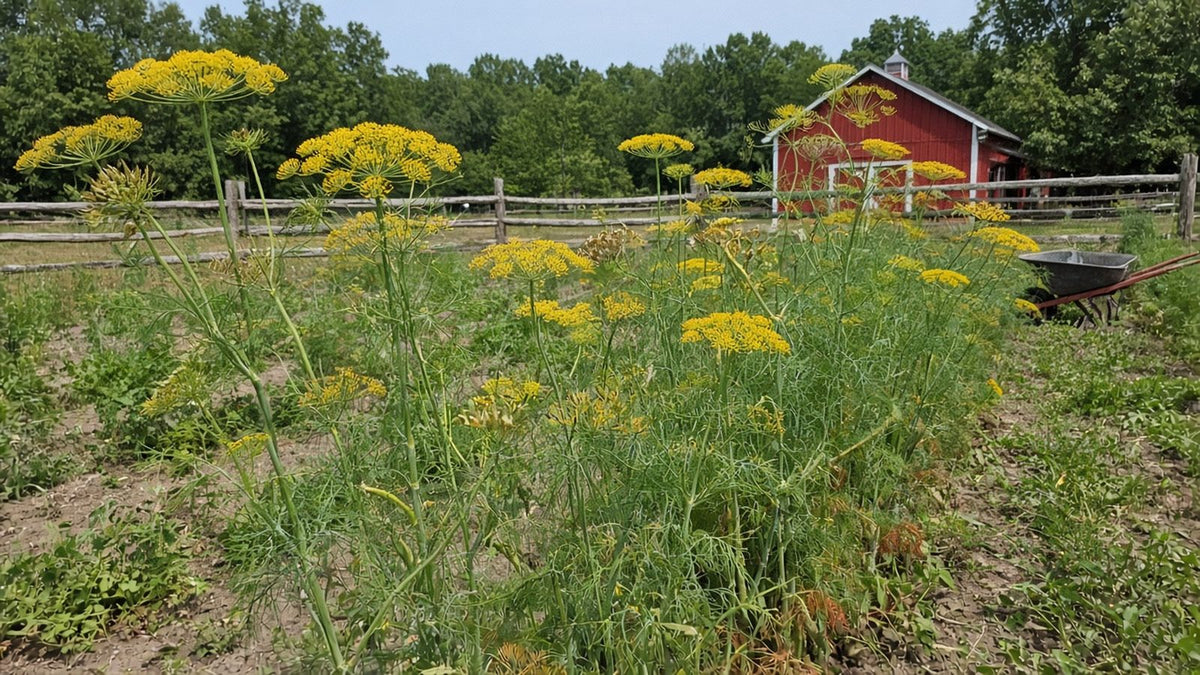
Dill grows quickly from seed into feathery blue-green plants, 18 inches to 4 feet tall depending on the variety. You can harvest the leaves (dill weed) within weeks and the seed heads later for pickles.
It has a taproot and dislikes transplanting, so sow it where it will grow and keep sowing small batches for a steady supply.
Dill quick facts
| Plant type | Annual herb |
|---|---|
| Sun | Full sun |
| Soil | Average to fertile, loose, well-drained |
| Sowing depth | About ⅛–¼ inch (some guides up to 1 inch) |
| When to sow | Early spring, around the last frost; again in late summer |
| Germination | 10–14 days |
| Spacing | Thin to 3–6 in for leaves; 12–15 in for large plants |
| Succession | Every 10–14 days while cool |
| Height | 18 inches to 4 feet |
When to plant dill
Sow dill in early spring, around a week or two before your last hard frost to just after it. Make more sowings every 10–14 days while the weather is cool for continuous leaves. Dill tolerates light frost, so late-summer plantings work for fall harvests, and late-fall sowings can germinate the following spring.
By zone:
- Cold zones (about 3–5): sow from early spring through early summer.
- Mid zones (about 6–7): spring and late-summer sowings give the most leaf.
- Warm zones (about 8–10): sow fall through spring; summer heat makes it bolt quickly.
Where to grow dill
Plant dill in full sun, in average to fertile soil that drains well. Avoid compacted soil, which restricts the taproot. Tall varieties may need staking or a sheltered spot. Compact, slow-bolting varieties grow well in containers.
How to sow dill seeds

Starting seeds indoors
Dill is best sown directly because it transplants poorly. If you start it indoors, sow in individual pots four to six weeks ahead and transplant while small.
Direct sowing, step by step
- Choose a sunny spot with loose, well-drained soil.
- Sow seeds shallowly, about ⅛–¼ inch deep, in rows about 18 inches apart.
- Keep the soil moist until seedlings appear in 10–14 days.
- Thin to 3–6 inches apart when seedlings are 3–4 weeks old (wider for large plants grown for seed).
- Sow again every 10–14 days for a continuous harvest.
Keep the soil from drying out. Dill that dries out tends to bolt.
Caring for dill

Watering
Keep soil evenly moist; drought pushes dill to flower early.
Feeding
Average garden soil is enough; heavy feeding isn't needed.
Support and self-seeding
Stake tall plants in windy spots. Dill readily self-seeds; cut seed heads before they shatter if you don't want volunteers.
Pests and wildlife
Aphids and powdery mildew can appear. Black swallowtail caterpillars feed on dill, and many gardeners plant extra for them.
Harvesting dill

Pick leaves as needed once plants are several inches tall; foliage is best before the plant flowers. For seed, cut the heads when the seeds are fully developed and turning from green to brown, then dry them in paper bags and shake the seeds loose.
Saving dill seeds
Saving dill seed is simple: the dried seed you harvest for the kitchen is the same seed you sow next season.
Choosing a dill variety
Dill varieties fall into two broad groups: types grown mainly for seed heads, and slow-bolting types grown mainly for leaves. There are also short varieties that do well in containers.
'Bouquet' is a widely available all-rounder, productive for both leaves and seed, growing 2–3 feet tall with blue-green foliage and large seed heads. 'Fernleaf' is a compact, slow-bolting variety only about 18 inches tall with extra-feathery foliage and is a good choice for pots. 'Dukat' is a vigorous Danish variety with strong flavor that can reach 4 feet. If you mainly want fresh leaves, choose a slow-bolting type and keep sowing small batches. If you want pickling heads, a seed type like 'Bouquet' is the better pick.
Dill in the garden
Dill isn't very competitive, so keep the bed well weeded, especially while seedlings are small. In containers, use a deep pot to make room for the long taproot, and stake tall plants: the hollow stems are easily damaged by wind, rain and hail.
The finely cut foliage and open yellow umbels also look at home in a cottage garden or mixed border, where they add vertical interest. In flower, dill attracts small beneficial insects such as syrphid (flower) flies. Deadhead spent flowers if you don't want lots of volunteer seedlings next year.
Dill growing FAQ
Can I transplant dill?
It transplants poorly because of its taproot. Direct sowing is best.
Why does my dill flower so fast?
Heat and dry soil cause early bolting. Sow in cool weather, keep the soil moist, and try slow-bolting varieties.
How long does dill take to germinate?
About 10–14 days.
How do I harvest dill seed?
Cut the heads when the seeds are mature and turning brown, then dry them in paper bags.
Does dill come back every year?
It is an annual, but it often reseeds itself.
Is dill bothered by deer?
Dill has few pest problems and isn't attractive to deer, though aphids and powdery mildew can appear occasionally.
Shop dill seeds
Download the printable one-page dill guide (PDF)
Related growing guides
See every guide in the Herb Library or the Grower's Library.
Sources: University of Wisconsin–Madison Extension, Dill; University of Maryland Extension, Dill; Iowa State University Extension, Seed library planting instructions. Planting dates vary with your local frost dates; check your county extension office for local timing.