
Herb Growing Guide
How to Grow Basil from Seed
Grow bushy, fragrant basil from seed: start indoors, transplant after frost, pinch for branching and harvest all summer. Quick facts, care tips and FAQs.
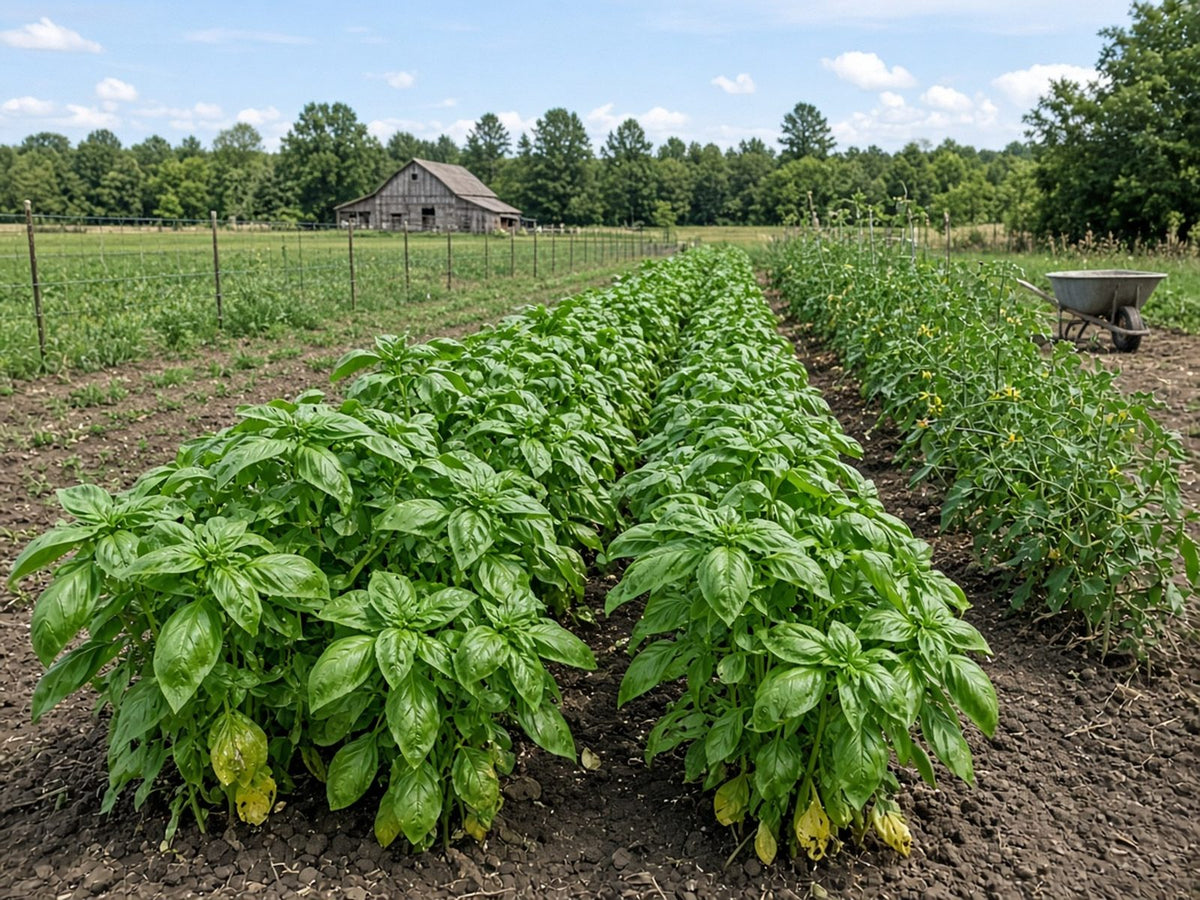
Basil is a summer herb that loves heat. It grows easily from seed, but it sulks in cold weather and is killed by frost, so it is always one of the last things to go into the garden.
Pinch it often and keep the flowers off, and a few plants will supply pesto, salads and sauces from early summer until the first cold snap.
Basil quick facts
| Plant type | Tender annual herb |
|---|---|
| Sun | Full sun, 6+ hours |
| Soil | Moist but well-drained |
| Start indoors | 4–6 weeks before your outdoor planting date |
| Sowing depth | ¼ inch |
| Germination | 5–10 days at about 70°F |
| Spacing | About 12 inches between plants, 18 inches between rows |
| First harvest | About 6 weeks after planting |
| Height | About 18 inches; some large types to 3–4 feet |
When to plant basil
Plant basil outdoors only after all danger of frost has passed and the weather has warmed up. Some guides suggest waiting about a month after the last spring frost. Start seed indoors four to six weeks before that, or sow directly once the soil is warm.
By zone, think in terms of warmth:
- Cold zones (about 3–5): start indoors and transplant late, once nights are reliably mild; containers you can move are useful.
- Mid zones (about 6–7): transplant or direct sow in late spring; a second sowing in early summer keeps young plants coming.
- Warm zones (about 8–10): sow in spring and again in summer. Basil grows strongly in the heat, but keep it watered.
Where to grow basil
Pick a spot with at least six hours of direct summer sun and soil that stays moist but drains freely. Avoid very rich, heavily fertilized beds; overly lush growth can taste milder. Basil does well in pots and window boxes and is a natural fit beside tomatoes in the vegetable garden.
How to sow basil seeds

Starting seeds indoors
Sow seeds ¼ inch deep in seed-starting mix and keep them at about 70°F; they should sprout in 5–10 days. Grow the seedlings under bright light. When they have two sets of true leaves, move each into its own small pot. Harden them off before planting out, and don't rush. Cold nights set basil back badly.
Direct sowing, step by step
- Sow seeds ¼ inch deep indoors 4–6 weeks before your planting date, or outdoors in warm soil after frost.
- Keep the mix at about 70°F and evenly moist until seedlings emerge in 5–10 days.
- Pot up seedlings once they have two sets of true leaves.
- Transplant after frost, about 12 inches apart.
- Pinch the growing tips once plants are established to encourage branching.
Basil sown directly into warm garden soil does well. Sow thinly, cover lightly, and keep the surface moist. Once the seedlings are up, thin them to about 12 inches apart in rows 18 inches apart. You can transplant or eat the thinnings.
Caring for basil

Watering
Basil needs a fairly constant supply of moisture even though it hates soggy soil. A 3-inch mulch of shredded leaves or pine needles helps keep moisture even and the leaves clean.
Feeding
Go easy. Over-fertilizing pushes rapid, soft growth with less flavor in the leaves. Compost at planting is often enough; follow a soil test if you add more.
Pinching and flowers
Pinch stems as they lengthen to keep plants bushy and compact. Pinch off flower spikes as they appear. Flowering slows leaf production.
Pests and diseases
Downy mildew is the most serious basil disease; resistant varieties are available. Fusarium wilt can survive in the soil for years. Extension sources also list aphids, Japanese beetles, spider mites, thrips and slugs. Good air flow and watering at the soil line help.
Harvesting basil

Begin picking leaves about six weeks after planting. Harvest by cutting stems just above a pair of leaves, which also encourages branching. For drying, cut just before the flowers open, when the flavor is strongest. Basil hates cold, so harvest heavily before the first frost.
Saving basil seeds
To save seed that stays true to type, grow only one variety or separate different cultivars by about 150 feet, since basil cross-pollinates. Let a few spikes flower and dry on the plant, then rub out the small black seeds.
Basil growing FAQ
When can I plant basil outside?
After all danger of frost has passed and the weather is warm. Cold nights stunt basil even without frost.
Why are my basil seedlings leggy?
Not enough light is the usual reason. Keep seedlings close under grow lights or in your brightest window, and pot them up once they have two sets of true leaves.
Should I remove basil flowers?
Yes, if you want leaves. Pinching off flower spikes keeps the plant producing foliage.
Can basil grow in a pot?
Yes. Use a container with drainage, full sun and steady moisture.
How do I keep basil from getting downy mildew?
Plant resistant varieties, space plants for airflow, water the soil rather than the leaves, and remove infected plants promptly.
Shop basil seeds
Download the printable one-page basil guide (PDF)
Related growing guides
See every guide in the Herb Library or the Grower's Library.
Sources: University of Maryland Extension, Basil; Clemson Cooperative Extension HGIC, Basil; Oklahoma State University Extension, Culinary herbs for Oklahoma gardens; University of Maryland Extension, Care of herbs and starting herbs from seed. Planting dates vary with your local frost dates; check your county extension office for local timing.