
Herb Growing Guide
How to Grow Cilantro from Seed
Grow cilantro (coriander) from seed: sow directly in cool weather, succession plant every 2–3 weeks, slow bolting and harvest leaves or coriander seed.
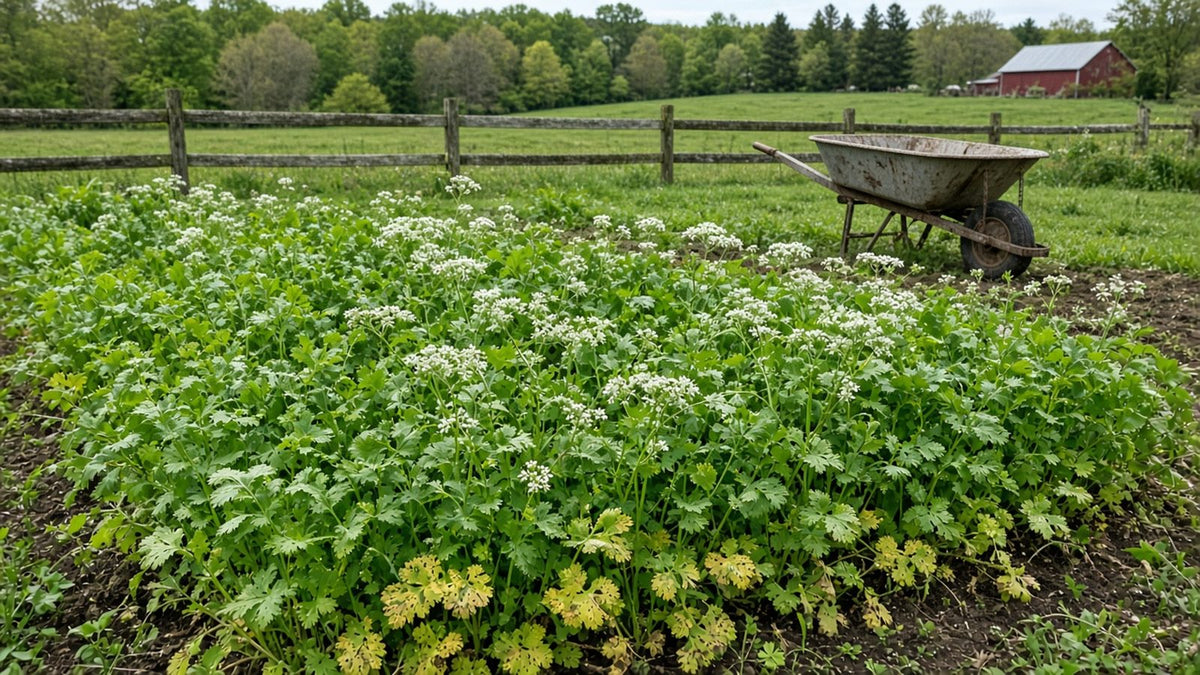
Cilantro and coriander are the same plant, Coriandrum sativum. The fresh leaves are cilantro; the round seeds that follow the flowers are the spice coriander. One sowing can give you both.
Cilantro is a cool-weather herb. In summer heat it rushes to flower (bolts), so the secret is to sow small batches often in spring and fall rather than one big planting.
Cilantro quick facts
| Plant type | Annual herb; prefers cool weather |
|---|---|
| Sun | Full sun; tolerates light shade |
| Soil | Average, well-drained |
| Sowing depth | ¼–½ inch |
| Spacing | Thin to 3–6 inches for leaves; 12 inches for seed |
| Row spacing | About 12 inches |
| Start indoors? | Not recommended. Long taproot transplants poorly |
| Succession sowing | Every 2–3 weeks |
| Harvest | Leaves before flowering; seeds when heads turn brown |
When to plant cilantro
Sow cilantro outdoors in spring around the time you'd sow lettuce, roughly two to four weeks before the last spring frost or right after it. Make new sowings every two to three weeks while the weather stays cool. Summer sowings usually bolt before giving much leaf. Sow again in mid to late summer, around mid-August in many areas, for a fall crop.
By zone:
- Cold zones (about 3–5): spring sowings from as soon as the soil can be worked, and a late-summer sowing for fall.
- Mid zones (about 6–7): early spring and late summer to fall are the main windows.
- Warm zones (about 8–10): fall, winter and early spring are best; cilantro bolts fast in hot weather.
Where to grow cilantro
Cilantro grows best in full sun and fertile, well-drained soil, though it tolerates light shade, which can slow bolting a little as days warm up. It does not like soggy, humid conditions. Because of its long taproot, sow it where it will grow, in the bed or in a deep container.
How to sow cilantro seeds

Starting seeds indoors
Avoid starting cilantro indoors. It forms a long taproot early and does not transplant well. Extension herb guides consistently recommend sowing coriander directly in the garden.
Direct sowing, step by step
- Prepare a fine, smooth seedbed in full sun.
- Sow seeds ¼–½ inch deep in rows about a foot apart.
- Keep the soil lightly moist until seedlings emerge.
- Mulch around seedlings once they are up.
- Thin to 3–6 inches apart for leaf harvest, or about 12 inches if you want coriander seed.
- Sow again every 2–3 weeks while the weather is cool.
Each round cilantro 'seed' is actually a fruit that can contain more than one seed, so seedlings may come up in small clusters. For leaf production you can sow thickly; commercial growers often don't thin at all.
Caring for cilantro

Watering
Water moderately and keep the soil evenly moist, not wet. Cilantro dislikes soggy soil, but drought stress hurries bolting.
Feeding
Average garden soil with some compost is usually plenty. Heavy feeding isn't needed.
Slowing bolting
Choose slow-bolting varieties, sow in cool seasons, give some light shade as days lengthen, and keep sowing new batches so you always have young plants coming on.
Pests and diseases
Cilantro has few serious pests in home gardens. Downy mildew can show up in cool, wet conditions; good spacing and airflow help.
Harvesting cilantro

Start cutting leaves once plants are a few inches tall, taking the outer stems and letting the center keep growing. Some slow-bolting varieties are ready in about 28–40 days. Harvest before flower stalks form; leaves on flowering stems become finer and less flavorful. For coriander, let the flower heads mature and cut them as they turn from green to brown, then dry them on paper or cloth and rub out the seeds.
Saving cilantro seeds
Cilantro reseeds readily, and saving seed is easy: the coriander you dry for the kitchen is the same seed you can sow next season.
Choosing a cilantro variety
For leaves, choose a slow-bolting variety. Illinois Extension lists 'Leisure' (heat tolerant and slow to bolt, ready in 28–40 days), 'Marino' and 'Santo' as good options. If you grow cilantro for coriander seed, any variety will do, since you want it to flower.
Cilantro growing FAQ
Why does my cilantro bolt so fast?
Heat and long days trigger flowering. Sow in spring and fall, choose slow-bolting varieties, and make new sowings every two to three weeks.
Is cilantro the same as coriander?
Yes. Cilantro is the leaf and coriander is the dried seed of the same plant, Coriandrum sativum.
Can I transplant cilantro?
It is not recommended. Cilantro has a long taproot and usually struggles after transplanting, so sow it directly.
Does cilantro grow in shade?
It tolerates light shade, which can be helpful as days warm up, but grows best in sun during cool weather.
How do I harvest coriander seed?
Let the plants flower and set seed, then cut the heads as they turn brown and dry them for a week or two before rubbing out the seeds.
Shop cilantro seeds
Download the printable one-page cilantro guide (PDF)
Related growing guides
See every guide in the Herb Library or the Grower's Library.
Sources: Iowa State University Extension, Seed library planting instructions; Oklahoma State University Extension, Culinary herbs for Oklahoma gardens; UMass Extension New England Vegetable Management Guide, Parsley and cilantro; University of Illinois Extension, Cilantro; University of Maryland Extension, Care of herbs and starting herbs from seed. Planting dates vary with your local frost dates; check your county extension office for local timing.