
Vegetable Growing Guide
How to Grow Cabbage from Seed
Grow cabbage from seed: start indoors 4–6 weeks early, transplant at 15–18 inches, feed, protect from cabbage worms and harvest firm heads without splits.
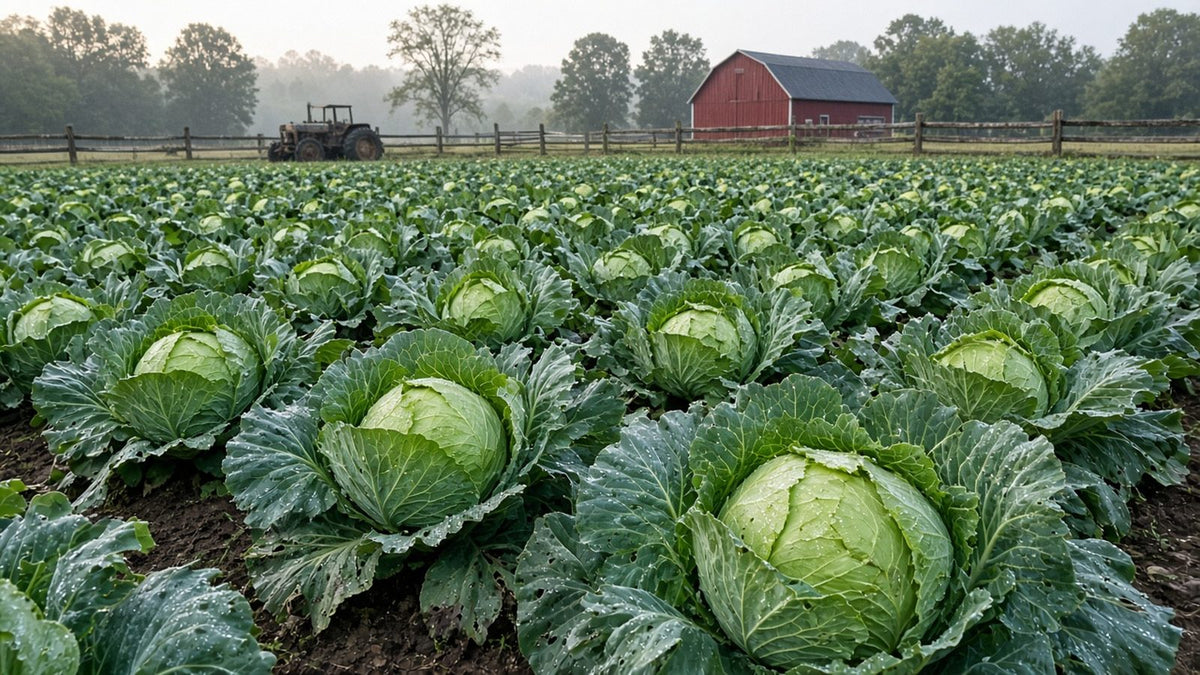
Cabbage is a sturdy cool-season crop that stores well and tolerates real cold, down to about 15–20°F once established. With early, mid and late varieties you can harvest from early summer through late fall.
Start transplants indoors for spring, or sow in midsummer for a fall crop that matures in cool weather.
Cabbage quick facts
| Plant type | Hardy biennial grown as an annual |
|---|---|
| Sun | Full sun, 6+ hours |
| Start indoors | 4–6 weeks before transplanting |
| Sowing depth | ¼–½ inch |
| Indoor temperature | 60–70°F; no heat mat needed |
| Spacing | 15–18 inches apart; rows 24–36 inches |
| Days to maturity | About 60–100 days (60–90 from transplant) |
| Cold tolerance | Mature heads tolerate about 15–20°F |
| Storage | Up to 5 months at 32°F and 95% humidity |
When to plant cabbage
For spring, start seeds indoors in early spring, four to six weeks before transplanting, and set hardened-off seedlings out from mid-spring. For fall, sow in midsummer: about three weeks before setting plants out, or four to five weeks if growing transplants indoors. A July planting begins heading as summer turns to fall and is ready before a hard freeze. Direct-seeded cabbage takes up to three weeks longer than transplants.
By zone:
- Cold zones (about 3–5): indoor-started spring transplants plus a July planting for fall storage cabbage.
- Mid zones (about 6–7): spring transplants and midsummer sowings; row covers help in both seasons.
- Warm zones (about 8–10): grow it through fall and winter.
Where to grow cabbage
Choose full sun and fertile, well-drained soil. Rotate cabbage-family crops between beds each year to limit clubroot. Spacing controls head size: closer spacing gives smaller heads, so give large varieties more room.
How to sow cabbage seeds

Starting seeds indoors
Plant seed ¼ inch deep in seed-starting mix. No heat mat is needed; 60–70°F with bright overhead light grows the best seedlings, while warmer conditions make them tall and weak. Harden off over a week or two, bringing them in if nights drop below 40°F, then transplant 15–18 inches apart at the same depth they grew in the pot.
Direct sowing, step by step
- Start seeds ¼ inch deep indoors 4–6 weeks before transplanting.
- Grow at 60–70°F under bright light.
- Harden off seedlings over 1–2 weeks.
- Transplant 15–18 inches apart in rows 24–36 inches apart.
- Cover with row cover to protect from insects and hasten growth.
To direct seed, sow ¼–½ inch deep, three seeds every 15–18 inches, and thin to one. For summer sowings, choose a spot with some protection from the sun and keep it well watered.
Caring for cabbage

Watering
Water about every three days until seedlings are established, then keep soil moisture ample all season, especially when starting a fall crop in summer heat.
Feeding
Use starter fertilizer at transplanting and side-dress about three weeks later, or when plants are about four inches tall.
Preventing splits
Heads can split when heavy rain follows dry weather. If you can't harvest a mature head, twist or bend the stem to break some roots and slow growth.
Pests and diseases
Imported cabbage worms, cabbage loopers and flea beetles are the main pests. Row covers applied at planting are the simplest control. Clubroot is the main soil disease, so rotate beds.
Harvesting cabbage

Harvest when heads feel firm when squeezed. Size depends on variety, fertility and spacing. Mature heads can hold in the garden for about two weeks in summer and three to four weeks in fall. If temperatures will drop below about 25°F, protect heads with row cover. Cut the head at its base with a sharp knife. Cabbage keeps about two weeks in the fridge and up to five months in very cold, humid storage.
Saving cabbage seeds
Cabbage is biennial and must overwinter to flower, and it crosses with kale, broccoli and other Brassica oleracea crops.
Choosing cabbage types
Round green and red cabbages are the classic heading types. Some varieties are good for "field holding" and are less likely to split once heads reach mature size. Bok choy and choy sum are related mustard-family greens that also prefer cool weather.
Cabbage tolerates below-freezing temperatures late in its development. If overnight lows drop below 25°F, cover the heads with row cover. Like all cole crops, grow it where you haven't grown cabbage, broccoli, kale, cauliflower, Brussels sprouts or turnips for the past four years.
Cabbage growing FAQ
How long does cabbage take to grow?
About 60–100 days depending on variety; direct-seeded cabbage takes up to three weeks longer than transplants.
Why did my cabbage split?
Usually rapid growth after heavy rain or irrigation when heads are mature. Harvest promptly or bend the stem to slow growth.
How cold can cabbage tolerate?
Established cabbage tolerates about 15–20°F. Protect heads with row cover below about 25°F.
How far apart should cabbage be planted?
About 15–18 inches apart. Closer spacing gives smaller heads.
How do I keep worms out of cabbage?
Cover plants with floating row covers from planting time.
Shop cabbage seeds
Download the printable one-page cabbage guide (PDF)
Related growing guides
- How to Grow Carrots from Seed
- How to Grow Tomatoes from Seed
- How to Grow Lettuce from Seed
- How to Grow Cucumbers from Seed
- How to Grow Radishes from Seed
- How to Grow Peppers from Seed
See every guide in the Vegetable Library or the Grower's Library.
Sources: University of Minnesota Extension, Growing cabbage; University of Maryland Extension, Growing cabbage in the home garden. Planting dates vary with your local frost dates; check your county extension office for local timing.