
Vegetable Growing Guide
How to Grow Broccoli from Seed
Grow broccoli from seed for spring or fall heads: when to start indoors, transplant spacing, feeding, cabbage worm control and harvesting side shoots.
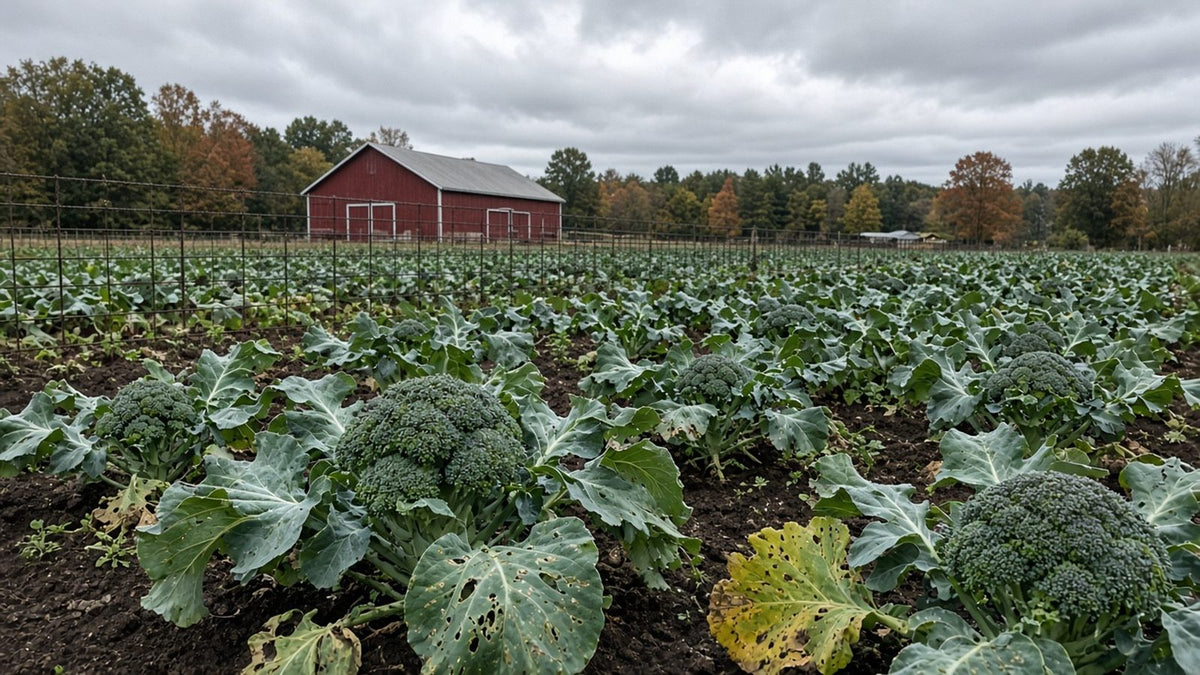
Broccoli is a cool-weather crop that rewards good timing. Grown in the right season, one plant gives you a big central head and then weeks of smaller side shoots.
Hot weather is its enemy. Heat can stop heads from forming at all, so most gardeners either rush a quick spring crop or, often more successfully, grow broccoli for fall.
Broccoli quick facts
| Plant type | Hardy biennial grown as an annual |
|---|---|
| Sun | Full sun, 6+ hours |
| Sowing depth | ¼–½ inch |
| Germination | About 2 weeks; no bottom heat needed |
| Start indoors | 5–7 weeks before transplanting |
| Spacing | 8–24 inches apart; rows 24–30 inches |
| Days to maturity | About 55–65 days from transplant (longer in fall) |
| Variety choice | Spring: heat-tolerant 50–60-day types; fall: 60–85-day types |
| Watch for | Heat above about 86°F by day / 77°F at night |
When to plant broccoli
For spring, set out five- to seven-week-old transplants about four weeks before your last frost. Cold below about 45°F can also make young plants bolt or button, so harden them off well. For fall, start transplants about four to six weeks before planting out in midsummer, or direct sow in mid-July, so heads form in cool autumn weather. Fall broccoli often yields better than spring.
By zone:
- Cold zones (about 3–5): a quick spring crop of heat-tolerant varieties, plus a midsummer planting for fall heads.
- Mid zones (about 6–7): spring transplants a month before last frost, and late-summer plantings for fall.
- Warm zones (about 8–10): plant in fall for winter harvests; spring crops often meet heat too soon.
Where to grow broccoli
Plant broccoli in full sun in fertile, well-drained soil with plenty of organic matter; it is a heavy feeder. Rotate cabbage-family crops to new beds each year. Using a floating row cover in the first weeks protects plants from wind and insects.
How to sow broccoli seeds

Starting seeds indoors
Sow seeds ¼–½ inch deep in sterile seedling mix. Bottom heat isn't needed; the seeds germinate in about two weeks at ordinary temperatures. Turn on bright grow lights as soon as seedlings emerge. Feed with half-strength starter solution once the first true leaf appears. Harden off and transplant 8–10 inches apart or wider, setting plants at the same depth they grew in the pot.
Direct sowing, step by step
- Start seeds indoors 5–7 weeks before transplanting, ¼–½ inch deep.
- Grow seedlings under bright light; no heat mat needed.
- Harden off and transplant about 4 weeks before last frost (spring) or in midsummer (fall).
- Space plants 8–24 inches apart, at the same depth as in the pot.
- For fall, you can also direct sow in mid-July, 3 seeds every 8–10 inches, thinning to one.
To direct sow, drop three seeds every eight to ten inches, ¼–½ inch deep, and thin to the strongest seedling once they emerge.
Caring for broccoli

Watering
Keep the root zone moist by watering deeply and regularly in dry periods, and more often once heads start to form.
Feeding
Broccoli has high nutrient needs. Use a starter fertilizer at transplanting, side-dress three weeks later, and again after cutting the main head to push side shoots.
Heat and cold
Days near 86°F and nights above about 77°F can stop crown formation; plants may form a head when it cools. Choose varieties matched to your season.
Pests and diseases
Imported cabbage worms, cabbage loopers and flea beetles are the main pests; row covers keep them off. Clubroot can affect cabbage-family crops, so rotate beds.
Harvesting broccoli

Cut the central head while the buds are tight and before any flowers open or show yellow, taking it with six to eight inches of stalk. Mature heads range from about three to eight inches across depending on the variety. Smaller side shoots then develop for several weeks; keep cutting them before they flower. Store broccoli very cold and humid for one to two weeks, or blanch and freeze it.
Saving broccoli seeds
Broccoli crosses with other Brassica oleracea crops like kale and cabbage, so saving true seed needs isolation and a long season.
Choosing broccoli varieties
For spring planting, choose heat-tolerant, short-season varieties (50–60 days to harvest) so heads form before hot weather. For a fall crop, varieties with a longer 60–85-day cycle form heads in cooler temperatures. Broccoli raab (rapini) is a related, quicker crop grown for its leafy shoots and small buds.
Broccoli growing FAQ
Why didn’t my broccoli form a head?
Heat is a common cause: days near 86°F and nights above about 77°F can prevent heading. Cold stress on young transplants can also cause small 'button' heads.
Is fall or spring better for broccoli?
Fall broccoli often yields more because heads form in cool weather.
When should I harvest broccoli?
While the buds are tight and green, before any yellow flowers show.
Will broccoli grow back after cutting?
Yes. Most varieties produce smaller side shoots for several weeks after the main head is cut.
Do broccoli seeds need a heat mat?
No. They germinate in about two weeks at normal temperatures.
Shop broccoli seeds
Download the printable one-page broccoli guide (PDF)
Related growing guides
- How to Grow Carrots from Seed
- How to Grow Tomatoes from Seed
- How to Grow Lettuce from Seed
- How to Grow Cucumbers from Seed
- How to Grow Radishes from Seed
- How to Grow Peppers from Seed
See every guide in the Vegetable Library or the Grower's Library.
Sources: University of Minnesota Extension, Growing broccoli; University of Maryland Extension, Growing broccoli in the home garden. Planting dates vary with your local frost dates; check your county extension office for local timing.