
Vegetable Growing Guide
How to Grow Beets from Seed
Grow beets from seed: when to sow, soaking, depth, thinning seed clusters, watering and harvesting roots and greens. Quick facts and FAQs included.
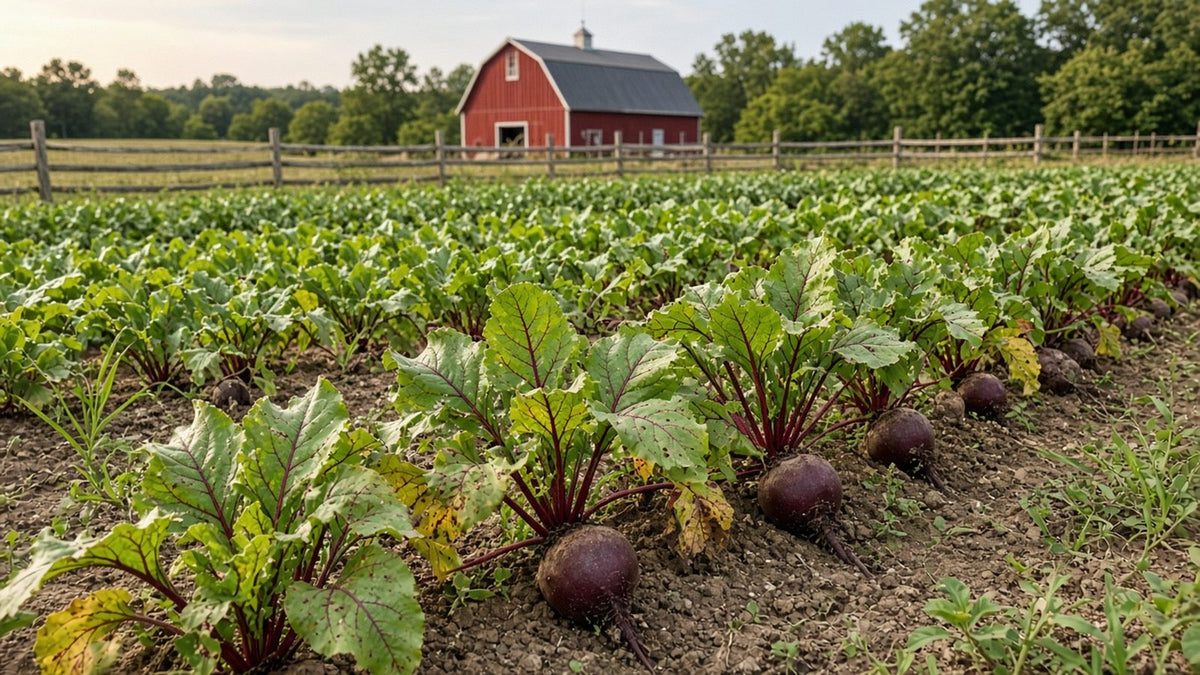
Beets give you two crops in one: tender greens and sweet roots in red, gold, white or striped. They are easy from seed, tolerate light frost, and can be sown from early spring right through summer.
Most beet 'seeds' are actually clusters holding several seeds, so seedlings come up in little groups. Thinning them is the key step.
Beet quick facts
| Plant type | Semi-hardy biennial grown as an annual |
|---|---|
| Sun | Full sun best; tolerates 4–6 hours |
| Germination temperature | 45–85°F |
| Pre-soak | 24 hours in warm water helps |
| Sowing depth | ½ inch (1 inch in sandy soil) |
| Spacing | Sow 2 in apart; thin to about 3 in |
| Germination | About 10–15 days |
| Days to harvest | About 50–60 days |
| Harvest size | Roots 1–3 inches across |
When to plant beets
Direct sow beets several weeks before your last spring frost, then keep sowing every few weeks through summer, up until about six weeks before your first killing frost in fall. In cold climates, beets are sown from mid-April to mid-June and again in August.
By zone:
- Cold zones (about 3–5): sow from mid-spring to early summer, plus an August sowing for fall.
- Mid zones (about 6–7): sow in early spring and again from midsummer for fall.
- Warm zones (about 8–10): fall through spring sowings give the best roots.
Where to grow beets
Beets grow best in full sun but tolerate partial shade with four to six hours of direct light. Fluff the soil with a garden fork and rake it smooth before sowing; loose, well-drained soil grows round, smooth roots. Wide rows or beds make efficient use of space.
How to sow beet seeds

Starting seeds indoors
Beets are normally direct sown. You can start them indoors in cell trays, but direct sowing is simpler and avoids disturbing the roots.
Direct sowing, step by step
- Soak seed in warm water for 24 hours before planting (optional but helpful).
- Loosen the soil with a fork and rake smooth.
- Sow seeds 2 inches apart and cover with ½ inch of fine soil (1 inch in sandy soil).
- Keep the soil evenly moist; expect seedlings in about 10–15 days.
- Thin to about 3 inches apart when seedlings are about 2 inches tall, eating the thinnings.
Unless you buy monogerm seed (one embryo per seed), each seed cluster sends up several seedlings. Thin when they're about two inches tall by snipping the extras. You can delay the final thinning until the small beets are big enough to eat.
Caring for beets

Watering
Keep moisture even and water deeply in dry spells. Uneven watering produces tough, woody roots.
Feeding
Beets have modest needs; fertilize according to a soil test.
Weeding
Beets compete poorly with weeds, especially when small. Hand-weed, mulch along each side of the row, and cultivate only shallowly, since deep hoeing damages the roots.
Pests and diseases
Leaf spot is the most common problem listed. Good spacing and watering at the soil line help keep foliage healthy.
Harvesting beets

Pull beets when the roots are 1 to 3 inches across. Smaller beets are best for pickling. If the roots are hard to pull, loosen the soil beside them with a spade first. Greens can be picked lightly along the way; cut the tops off the roots for storage, leaving a short stub. Beets store best very cold and humid, near 32°F with about 95% humidity. In the fridge, use a vented bag.
Saving beet seeds
Beets are biennial and flower in their second year after a cold period, and they cross with chard. Seed saving is best left to experienced growers.
Choosing beet varieties
Beets come in red, golden, white and striped varieties, and in round or cylindrical shapes. Cylindrical beets such as 'Cylindra' yield many uniform slices per root. Smaller beets are usually preferred for canning and pickling.
Beet seed is actually a fruit, a seed ball containing several embryos, so one "seed" can sprout several seedlings. Unless the packet says monogerm (one embryo per fruit), plan to thin the planting when the plants are about 2 inches tall. The thinnings make good salad greens.
Beet growing FAQ
Should I soak beet seeds before planting?
Soaking for 24 hours in warm water helps germination, which may also reduce rot in cool spring soil.
Why do several beet seedlings come up together?
Most beet seeds are clusters containing several embryos. Thin to one plant every few inches unless you used monogerm seed.
How long do beets take to grow?
Expect germination in about 10–15 days and harvests within about 50–60 days.
Can I eat beet greens?
Yes. Thinnings and young leaves are excellent cooked or raw.
Why are my beets all tops and small roots?
Crowding is the usual cause. Thin to about 3 inches and keep watering even.
Why do several beet seedlings come up in one spot?
Each beet "seed" is a seed ball holding several embryos. Thin to one plant per spot when seedlings are about 2 inches tall, or buy monogerm seed.
Shop beet seeds
Download the printable one-page beet guide (PDF)
Related growing guides
- How to Grow Carrots from Seed
- How to Grow Tomatoes from Seed
- How to Grow Lettuce from Seed
- How to Grow Cucumbers from Seed
- How to Grow Radishes from Seed
- How to Grow Peppers from Seed
See every guide in the Vegetable Library or the Grower's Library.
Sources: University of Maryland Extension, Growing beets in the home garden; Hennepin County Master Gardeners, Vegetables One by One; University of Minnesota Extension, Planting the vegetable garden. Planting dates vary with your local frost dates; check your county extension office for local timing.