
Fruit Growing Guide
How to Grow Cantaloupe from Seed
Grow cantaloupe and muskmelon from seed: warm soil, transplants, plastic mulch, pollination, watering and how to tell when melons slip from the vine.
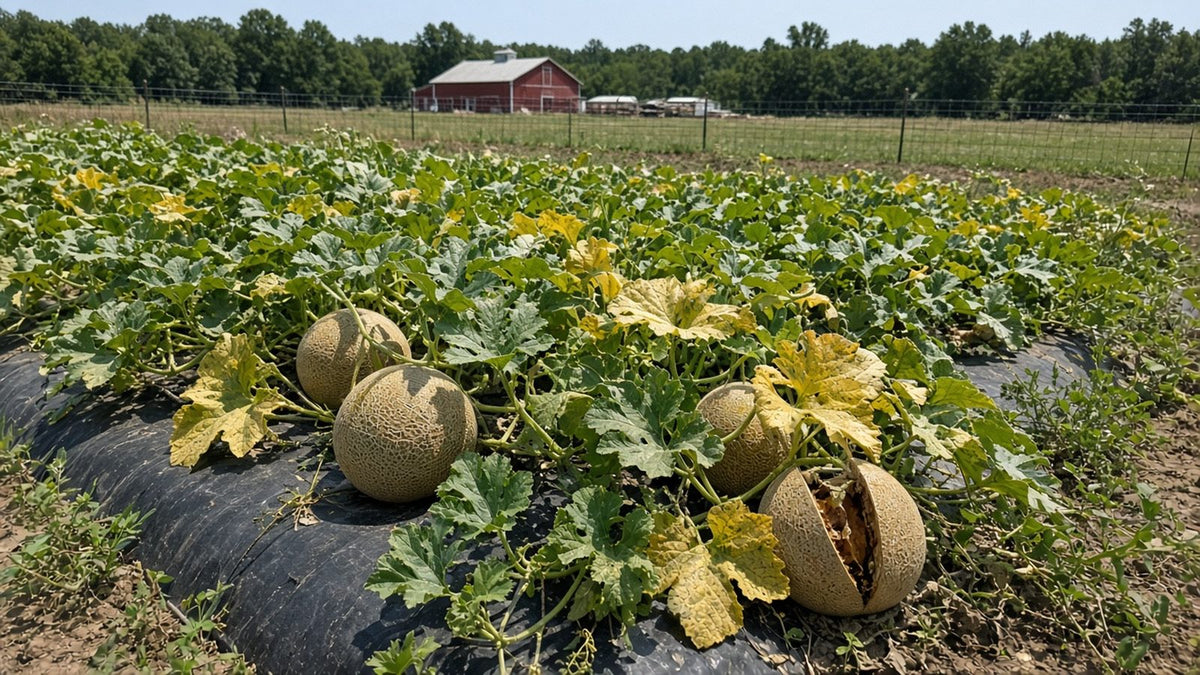
Homegrown cantaloupe (muskmelon) picked at full slip is sweeter and more fragrant than anything shipped. Cantaloupe is a little more forgiving of cool weather than watermelon or honeydew, but it still needs warm soil, full sun and a long, hot summer.
The method is the same as for other melons: warm the soil, plant at the right time, keep water steady until the fruit ripens, and let the vine tell you when it's ready.
Cantaloupe quick facts
| Plant type | Very tender warm-season annual |
|---|---|
| Sun | Full sun, 8–10 hours preferred |
| Soil temperature | At least 65°F; germination best at 70–90°F |
| Start indoors | 2–4 weeks before planting out, in 4-inch pots |
| Spacing | About 24 in in rows, rows 5–6 ft |
| Sowing | 2–3 seeds per group, groups 18–24 inches apart |
| Ripening | 35–45 days after flowering |
| Days to maturity | About 80–100 days from transplanting |
| Harvest sign | Fruit slips easily from the vine |
When to plant cantaloupes
Plant only once the soil has reached 65°F and nights are warm, about a week to ten days around your last frost date if the soil is warm enough. Indoor-started transplants go out at the same point. In northern areas, choose varieties with under about 90 days to maturity.
By zone:
- Cold zones (about 3–5): start indoors, plant through black plastic and choose early varieties; the first ripe fruit may arrive close to frost.
- Mid zones (about 6–7): direct sow or transplant in late spring.
- Warm zones (about 8–10): sow in spring; a second planting may be possible for late summer.
Where to grow cantaloupes
Pick a hot, sunny spot with fertile, well-drained, lighter-textured soil high in organic matter. Melons are hard to grow well in partial shade. Lay black plastic mulch to warm the soil, conserve water, control weeds and reduce fruit rot. On a sturdy trellis, small-fruited varieties can grow vertically if each fruit is supported in a quick-drying sling.
How to sow cantaloupe seeds

Starting seeds indoors
Sow seeds in large peat pots about 4 inches across, two to four weeks before your last frost. Keep them warm (germination is best at 70–90°F) and transplant once soil temperatures reach at least 65°F, disturbing roots as little as possible.
Direct sowing, step by step
- Prepare the bed and lay black plastic about 2 weeks before your last frost.
- When the soil is at least 65°F, sow 2–3 seeds per group, groups 18–24 inches apart.
- Space rows 5–6 feet apart.
- Thin to the strongest one or two plants per group.
- Remove protective covers once frost has passed so bees can pollinate.
Plastic mulch, hot caps and low tunnels can allow planting two or three weeks earlier. Remove covers once frost danger has passed, both to avoid heat injury and to let pollinators in. Cantaloupe flowers have a one-day pollination window, and poorly pollinated flowers drop or form misshapen fruit.
Caring for cantaloupes

Watering
Keep moisture consistent, especially early and through flowering and early fruit set. Reduce watering as the fruit ripens for better flavor. Water in the morning or at the soil line.
Feeding
Incorporate compost before planting and use a starter fertilizer for transplants. Excessive nitrogen can lower yield and quality.
Pollination
Cantaloupe produces male flowers on slender stems and perfect flowers with a small swollen ovary close to the vine. Bees move pollen between them; more seeds set means larger, better-shaped fruit.
Pests and diseases
Cucumber beetles and the bacterial wilt they spread are the major threat. Aphids, squash bugs and spider mites also appear, along with powdery mildew, downy mildew and anthracnose.
Harvesting cantaloupes

Cantaloupe ripens 35–45 days after flowering. As it nears maturity, the netting becomes coarse and rough, the background color turns from green to yellow and loses its shine, and the tendrils near the stem dry and brown. At peak flavor the fruit slips off the vine with a gentle twist. Don't wait for it to fall off on its own, because by then it's overripe. Melons ripen over several weeks; eat them promptly, as they keep only about a week in the fridge.
Saving cantaloupe seeds
Muskmelon varieties cross with each other, so save seed only from isolated open-pollinated plants. Rinse seeds from fully ripe fruit and dry thoroughly.
Cantaloupe growing FAQ
How do I know when cantaloupe is ripe?
The netting turns coarse, the skin turns from green to yellowish, and the melon slips from the vine with a gentle twist.
Why are my cantaloupes small or misshapen?
Poor pollination is a common cause. Remove row covers at flowering so bees can reach the blooms.
When should I plant cantaloupe?
Once the soil is at least 65°F and nights are warm, around or just after your last frost.
Can I grow cantaloupe on a trellis?
Yes, with small-fruited varieties. Support each fruit with a sling.
Is cantaloupe the same as muskmelon?
In North American gardens the netted, orange-fleshed melons sold as cantaloupe are muskmelons.
Shop cantaloupe seeds
Download the printable one-page cantaloupe guide (PDF)
Related growing guides
See every guide in the Fruit Library or the Grower's Library.
Sources: University of Minnesota Extension, Growing melons in the home garden; University of Maryland Extension, Growing melons in the home garden; Michigan State University Extension, How to grow melons. Planting dates vary with your local frost dates; check your county extension office for local timing.